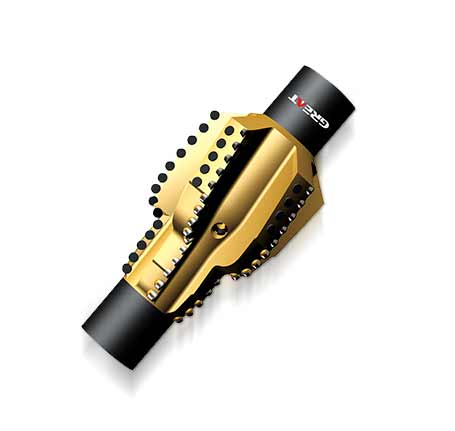
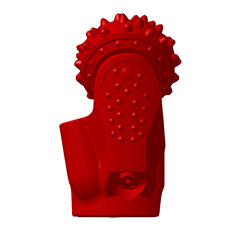
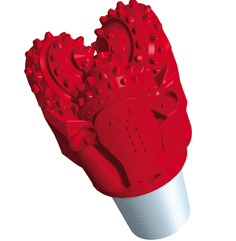
BLUF: Choosing between Steel Tooth (milled tooth) and Tungsten Carbide Insert (TCI) tricone bits depends primarily on formation compressive strength and abrasiveness. Steel Tooth bits are most effective in soft-to-medium, non-abrasive formations where high ROP is required at a lower initial cost. TCI bits are engineered for medium-to-hard, abrasive formations, offering superior durability, extended bit life, and higher total footage in challenging environments.
For a complete Tricone Drill Bit Guide here.
Key Takeaways
Formation Matching: Steel Tooth bits excel in soft formations; TCI bits are essential for abrasive, hard rock.
Economic Drivers: Use Steel Tooth for short-term cost savings; use TCI for long-term project economy via lower trip frequency.
Operational Constraints: TCI bits handle higher weight-on-bit (WOB) without premature cutter failure.
GREAT Expertise: With over a decade of manufacturing precision, GREAT provides optimized bit designs for both steel and TCI configurations.
Understanding the Fundamental Differences
In the field, the choice between a steel tooth and a TCI tricone bit can be the difference between a profitable project and a costly operational delay. At GREAT, our research and development team emphasizes that this decision is dictated by the rock mechanics of the target formation.
Steel Tooth bits feature cutters machined directly from the cone material, usually reinforced with hard-facing alloys to resist wear. In contrast, TCI bits utilize high-strength tungsten carbide inserts pressed into the cones. The hardness and geometry of these inserts define their specific application range.
.jpg "tricone_bit_(3).jpg")
When to Choose Steel Tooth Tricone Bits
Steel tooth bits are characterized by their ability to achieve high penetration rates in soft sediments. The long, sharp teeth effectively gouge and scrape the formation, efficiently removing cuttings. They are the preferred choice for:
Unconsolidated sands and soft clays.
Softer shales with low compressive strength.
Projects where low initial bit investment is a primary procurement priority.
Operations where the potential for "bit balling" exists, as the wider tooth spacing allows for better self-cleaning.
View a complete steel tooth tricone bit guide.
The Strategic Advantage of TCI Tricone Bits
TCI bits represent the backbone of modern drilling in demanding environments. By utilizing varying insert shapes—chisel, conical, or spherical—engineers can fine-tune the bit to the specific hardness of the rock. TCI bits are mandatory for:
Hard, abrasive formations like chert, quartzite, and granite.
Deep drilling applications where the cost of a trip (pulling the drill string) is extremely high.
Extended interval drilling where a single bit must traverse multiple geological layers.
Technical Comparison Matrix
| Feature | Steel Tooth Bit | TCI Tricone Bit |
|---|
| Formation Hardness | Soft to Medium | Medium to Ultra-Hard |
| Abrasion Resistance | Low | High |
| Primary Drilling Action | Gouging & Scraping | Crushing & Chipping |
| Bit Life | Short to Moderate | Long (Extended) |
| Initial Cost | Lower | Higher |
| Best Application | Surface Hole/Soft Sediments | Intermediate/Deep Sections |
Engineering Considerations for Drilling Optimization
At GREAT, we analyze hundreds of dull bits annually to assist our clients in optimizing their performance. A common mistake is using a steel tooth bit in a formation that contains streaks of abrasive material. While the bit may perform well in the soft clay sections, the abrasive streaks will rapidly "round" the teeth, leading to a catastrophic drop in Rate of Penetration (ROP).
For operations involving mixed formations, we often recommend TCI bits with specialized insert distributions. This provides a balance between the aggressive cutting action of steel teeth and the extreme durability of tungsten carbide.
Real-World Application: Improving Cost-Per-Foot
Consider a project in a medium-hard limestone formation. A contractor using a standard steel tooth bit might achieve a high initial ROP, but the bit dulls within 40 hours, requiring a costly trip. By switching to a GREAT-engineered TCI bit, the ROP may be slightly lower initially, but the bit lasts for 120 hours. When calculating the total project cost—accounting for rig time, crew costs, and bit price—the TCI bit offers a significantly lower cost-per-foot.
.jpg "tricone_bit_(4).jpg")
Conclusion
Selecting between steel tooth and TCI tricone bits is a critical engineering decision that impacts project profitability. While steel tooth bits offer a niche advantage in soft, non-abrasive environments, TCI bits remain the standard for high-performance, cost-effective drilling across the majority of oil, gas, and mining applications.
Ready to optimize your drilling performance? Contact the expert team at GREAT today for a detailed bit selection analysis or to discuss your specific project requirements. Leveraging our 86,000 m² manufacturing base and over a decade of industry expertise, we deliver the precision tools your operations demand.
Frequently Asked Questions
Can I use TCI bits in soft formations?
Yes, but it is often inefficient. TCI bits designed for hard rock may not achieve the necessary penetration rate in soft formations, leading to higher costs per meter. However, GREAT produces specific TCI designs (often called 'soft formation TCI bits') that feature aggressive, long-extension inserts for such applications.
How does abrasive formation impact Steel Tooth bit life?
Abrasive formations cause rapid loss of the hard-facing material on steel teeth. Once the hard-facing is breached, the underlying steel wears away exponentially, quickly reducing the bit to a 'bald' state and halting effective drilling.
What maintenance is required for tricone bits?
Proper storage in a dry environment and regular inspection of the bearing seals are critical. For GREAT bits, we ensure rigorous quality control on our bearing packages, but field operators should always check for excessive play or seal damage prior to running the bit.
Why does GREAT suggest TCI bits for geothermal drilling?
Geothermal drilling often involves hard, hot, and igneous formations. Steel teeth would soften and deform under these thermal and mechanical loads, whereas tungsten carbide remains stable, ensuring consistent drilling performance.
How do I select the right bit for my project?
Selection should be based on a comprehensive formation analysis (IADC bit classification). Contact our engineering team at GREAT with your well logs or rock samples, and we will perform a tailored bit selection analysis for your specific geological conditions.
 English
 français
 Deutsch
 Español
 italiano
 русский
 português
 العربية
 tiếng việt
 ไทย
ไทย Nederland