Tricone Drill Bit Applications
Tricone drill bits are among the most versatile drilling tools available today and are widely used across multiple industries due to their ability to perform efficiently in a broad range of geological conditions. Whether drilling through soft clay, fractured limestone, abrasive sandstone, or hard granite, tricone bits can be engineered to deliver reliable performance and long service life. Their adaptability, cost-effectiveness, and compatibility with various drilling methods have made them a preferred choice for contractors and drilling professionals worldwide.
Oil and Gas Drilling
The oil and gas industry remains one of the largest users of tricone drill bits. These bits are commonly employed in surface hole sections, intermediate intervals, and hard formation drilling where formation characteristics may vary significantly throughout the well.
Tricone bits are particularly valued for their ability to handle interbedded formations and unpredictable geological conditions. Compared to some fixed-cutter alternatives, they often provide greater durability when drilling through fractured formations or zones containing hard stringers.
Common applications include:
Surface hole drilling
Intermediate hole sections
Directional drilling operations
Hard and abrasive formations
Exploration and production wells
Their versatility makes them an important tool in both onshore and offshore drilling projects.
Water Well Drilling
Water well contractors frequently rely on tricone bits because groundwater projects often encounter multiple formation types within a single borehole. A properly selected tricone bit can efficiently drill through clay, sand, gravel, shale, and limestone without requiring frequent bit changes.
Key benefits for water well drilling include:
Excellent adaptability to mixed formations
Long operational life
Consistent borehole quality
Reduced downtime and maintenance
These advantages help contractors improve productivity while maintaining accurate and stable well construction.
Mining Operations
Mining companies utilize tricone drill bits for both exploration and production activities. The durable cutting structure and impact-resistant design make tricone bits suitable for highly abrasive rock environments commonly found in mining operations.
Typical mining applications include:
Blast hole drilling
Mineral exploration
Open-pit mining
Production drilling
Premium TCI tricone bits are often selected for mining projects because their tungsten carbide inserts provide superior wear resistance and extended service life in challenging formations.
Geothermal Drilling
Geothermal drilling presents unique challenges due to extreme temperatures and hard volcanic rock formations. Tricone bits, particularly TCI designs, are widely used because they can withstand the demanding conditions associated with geothermal energy development.
Common geothermal drilling conditions include:
Their robust design helps maintain drilling efficiency while reducing the frequency of costly bit replacements.
HDD and Foundation Drilling
Tricone bits are also extensively used in construction and infrastructure projects. In horizontal directional drilling (HDD), they help install pipelines, telecommunications cables, and utility conduits beneath roads, rivers, and urban areas. Their ability to maintain stable drilling performance in mixed ground conditions makes them a valuable tool for trenchless construction.
Additional applications include:
Horizontal directional drilling (HDD)
Bridge foundation construction
Pile drilling
Infrastructure development
Civil engineering projects
With their ability to perform across a wide range of formations and industries, tricone drill bits remain one of the most reliable and widely used drilling solutions available today.
Tricone Drill Bits for Different Rock Formations
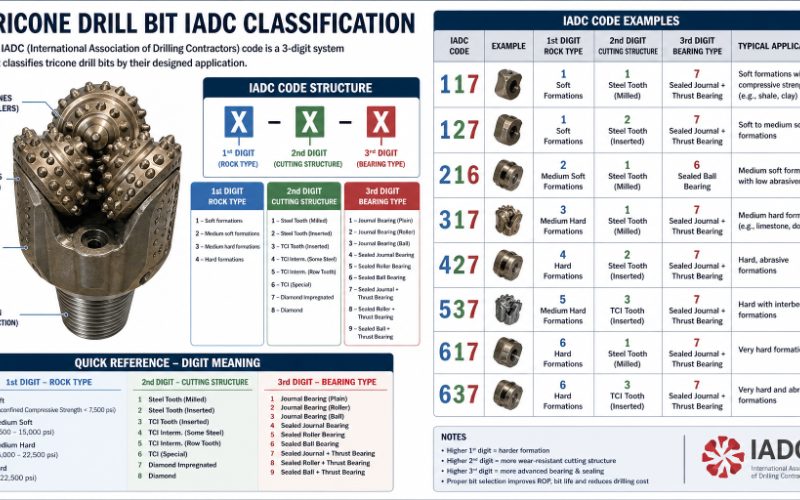
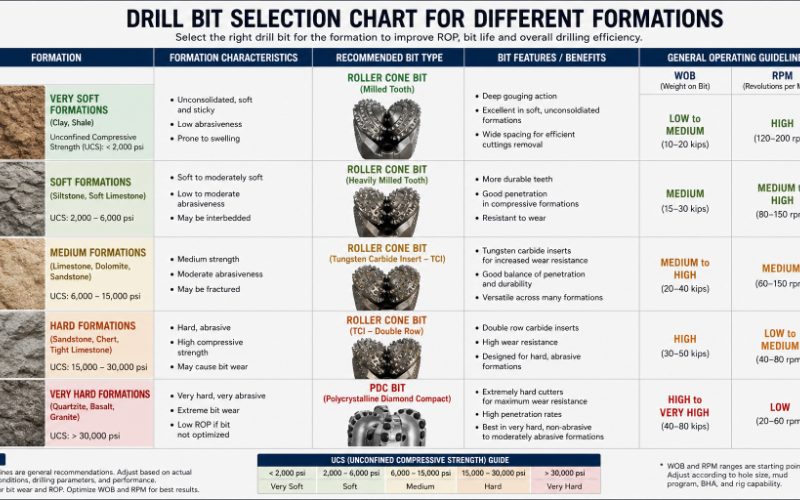
Selecting the right tricone drill bit based on formation characteristics is one of the most important factors influencing drilling efficiency, bit life, and overall project costs. Different rock formations vary significantly in hardness, abrasiveness, compressive strength, and fracture patterns. A bit that performs exceptionally well in soft clay may wear out rapidly when used in hard granite. Therefore, matching the bit design and IADC classification to the formation is essential for maximizing drilling performance and minimizing downtime.
Tricone Bits for Soft Formations
Soft formations are generally characterized by low compressive strength and relatively easy drillability.
Common examples include:
Clay
Sand
Soft shale
Marl
Unconsolidated sediments
For these formations, steel tooth tricone bits are often the preferred choice. Their long, aggressive teeth provide excellent gouging and scraping action, enabling high rates of penetration (ROP) while maintaining cost-effective drilling performance.
Recommended Specifications:
These bits are widely used in water well drilling, shallow oilfield sections, and geotechnical exploration projects.
Tricone Bits for Medium Formations
Medium formations require a balance between penetration rate and wear resistance.
Typical examples include:
Limestone
Dolomite
Medium-hard sandstone
Calcareous shale
In these conditions, TCI (Tungsten Carbide Insert) tricone bits with medium-sized inserts provide the best combination of durability and drilling efficiency. The carbide inserts offer greater resistance to wear while still maintaining effective rock-breaking capability.
Recommended Specifications:
These bits are commonly used in oil and gas drilling, water well construction, and mining exploration.
Tricone Bits for Hard Formations
Hard formations present the greatest drilling challenge due to their high compressive strength and abrasive nature. Common examples include:
Granite
Quartzite
Basalt
Hard limestone
Igneous rock formations
For these applications, operators typically select heavy-duty TCI tricone bits featuring densely packed tungsten carbide inserts and reinforced gauge protection. These designs are engineered to withstand severe impact loads and abrasive wear while maintaining borehole quality.
Recommended Specifications:
By selecting a tricone drill bit specifically designed for the target formation, drilling contractors can achieve faster penetration rates, longer bit life, reduced equipment wear, and lower overall drilling costs. Proper formation analysis should always be performed before choosing a bit to ensure optimal performance throughout the drilling operation.
Tricone Bit vs PDC Bit
Choosing between a tricone drill bit and a PDC (Polycrystalline Diamond Compact) bit is one of the most common decisions faced by drilling engineers and contractors. Both bit types are widely used across the oil and gas, mining, geothermal, and water well industries, but they operate using different cutting mechanisms and are optimized for different drilling conditions.
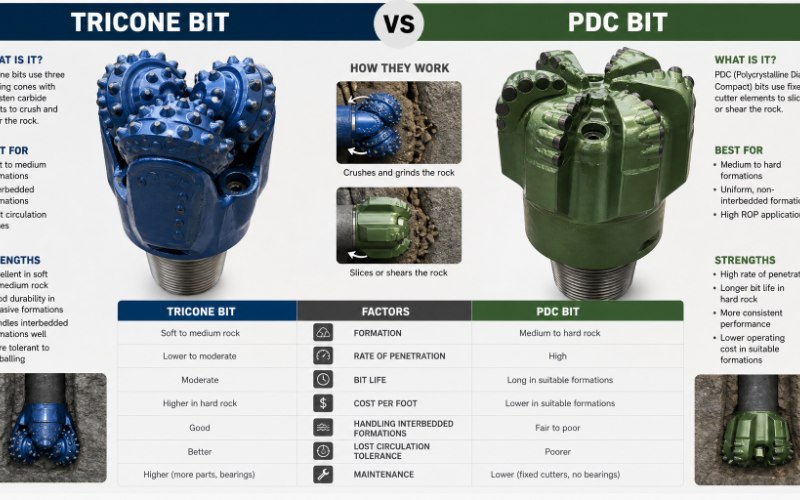
A tricone bit uses three rotating cones equipped with either steel teeth or tungsten carbide inserts (TCI) to crush, chip, and fracture rock formations. This rolling action allows the bit to adapt well to changing geological conditions and formations with varying hardness. Tricone bits are particularly effective in fractured formations, abrasive rock, and applications where impact resistance is important.
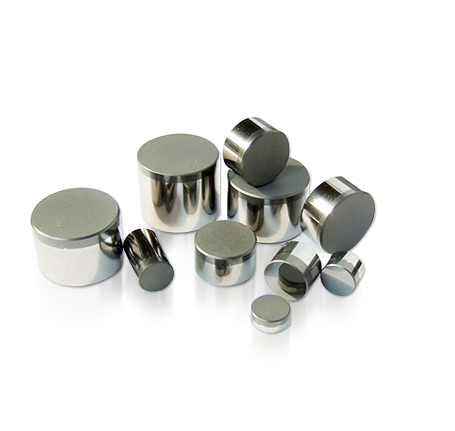
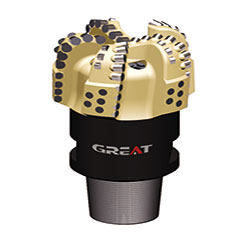
In contrast, a PDC bit uses fixed synthetic diamond cutters mounted on a solid bit body. Rather than crushing the formation, PDC cutters shear the rock continuously, which often results in significantly higher rates of penetration (ROP) in homogeneous formations. Because there are no moving parts, PDC bits can also provide longer drilling intervals under favorable conditions.
| Feature | Tricone Bit | PDC Bit |
|---|
| Cutting Method | Crushing and rolling | Continuous shearing |
| Formation Adaptability | Excellent | Best in consistent formations |
| Initial Cost | Lower | Higher |
| Impact Resistance | Excellent | Moderate |
| Hard Formation Performance | Excellent | Good |
| Rate of Penetration (ROP) | Moderate | High |
| Maintenance and Repair | Easier | More limited |
Generally, tricone bits are preferred when drilling through mixed, fractured, or highly variable formations where durability and versatility are critical. PDC bits are often selected for long drilling intervals in relatively uniform formations where maximizing drilling speed is the primary objective.
Neither bit is universally better than the other. The optimal choice depends on factors such as formation type, drilling objectives, operating costs, and expected bit life. Many drilling programs use both tricone and PDC bits at different stages of the same project to achieve the best overall drilling performance and cost efficiency.
Advantages and Limitations of Tricone Drill Bits
Tricone drill bits have been a trusted drilling solution for decades and remain one of the most widely used bit types in the oil and gas, mining, water well, geothermal, and construction industries. Their popularity stems from a combination of versatility, durability, and cost-effectiveness. However, like any drilling tool, tricone bits have both strengths and limitations that should be considered when selecting the most suitable bit for a project.
Advantages of Tricone Drill Bits
Excellent Formation Adaptability
One of the biggest advantages of tricone drill bits is their ability to perform across a wide range of geological formations. Whether drilling through soft clay, shale, limestone, sandstone, granite, or basalt, there is typically a tricone bit design optimized for the application. This versatility makes tricone bits particularly valuable in wells where formation conditions change frequently.
Strong Impact Resistance
Unlike fixed-cutter bits, tricone bits use rolling cones that can better absorb shock and impact loads. This makes them highly effective in fractured, interbedded, and unpredictable formations where sudden changes in rock hardness may occur. Their ability to withstand impact helps reduce the risk of catastrophic bit failure.
Cost-Effective Solution
Tricone bits generally require a lower initial investment than many premium drilling technologies, particularly advanced PDC bits. For projects involving variable formations or shorter drilling intervals, tricone bits often provide an attractive balance between performance and cost.
Stable Drilling Performance
The rolling action of the cones promotes smooth drilling and helps maintain good directional control. Reduced vibration can improve drilling stability, minimize equipment stress, and contribute to more consistent borehole quality.
Wide Availability and Customization
Tricone bits are available in numerous sizes, IADC classifications, bearing configurations, and cutting structures. This extensive selection allows operators to choose a bit tailored to their specific drilling objectives and formation conditions.
Limitations of Tricone Drill Bits
Lower Penetration Rates in Certain Formations
In homogeneous formations where continuous shearing is more efficient, PDC bits can often achieve higher rates of penetration (ROP) than tricone bits. As a result, tricone bits may not always be the fastest drilling option.
Bearing Wear and Mechanical Components
Because tricone bits contain moving parts, the bearing system is subject to wear over time. Bearing failure remains one of the most common reasons for bit replacement, particularly in high-temperature or highly abrasive environments.
Higher Maintenance Requirements
To maximize performance and service life, tricone bits require proper inspection, operating parameter control, and maintenance. Monitoring weight on bit (WOB), RPM, and hydraulic performance is essential to prevent premature wear and optimize drilling efficiency.
Overall, tricone drill bits offer an excellent combination of versatility, durability, and economic value, making them a preferred choice for many drilling applications despite certain operational limitations.
How to Choose the Right Tricone Drill Bit
Selecting the right tricone drill bit is one of the most important decisions in any drilling project. A properly matched bit can significantly improve penetration rates, extend bit life, reduce downtime, and lower overall drilling costs. Because geological conditions and drilling objectives vary widely, operators should evaluate several key factors before choosing a bit.
Formation Hardness
The first step in bit selection is understanding the formation to be drilled. Rock hardness, abrasiveness, and compressive strength all influence bit performance. The IADC classification system provides a useful guide for matching tricone bits to specific formations. Soft formations typically require steel tooth bits or soft-formation TCI bits, while hard and abrasive formations demand heavy-duty TCI designs with reinforced inserts.
Hole Diameter Requirements
The bit diameter must correspond to the desired borehole size and casing program. Selecting the correct bit size ensures proper well construction and helps avoid costly reaming operations.
Drilling Method
Different drilling methods may require different bit configurations. Operators should consider whether the project involves:
For example, air drilling applications often require specialized nozzle and hydraulic designs to maximize cuttings removal.
Drilling Depth
As well depth increases, operating conditions become more demanding. Deep drilling projects typically benefit from premium sealed-bearing or journal-bearing tricone bits that offer greater durability and longer service life.
Budget and Cost Efficiency
The lowest-priced bit is not always the most economical choice. Contractors should evaluate total drilling cost, including bit life, penetration rate, trip time, and replacement frequency. In many cases, a higher-quality bit can significantly reduce overall project expenses.
Expected Bit Life
Longer-lasting bits reduce non-productive time associated with pulling and replacing worn equipment. Evaluating expected footage and operating conditions helps determine whether investing in a premium bit design is justified.
By carefully considering formation characteristics, drilling conditions, and economic factors, operators can select a tricone drill bit that delivers optimal performance and maximum return on investment.
Common Tricone Drill Bit Problems and Solutions
Even high-quality tricone drill bits can experience performance issues if drilling parameters are not properly controlled. Understanding common bit failures and their causes helps operators improve drilling efficiency, extend bit life, and reduce equipment costs.
Broken Teeth
Broken or chipped teeth are among the most common forms of tricone bit damage.
Common Causes:
Recommended Solutions:
Reduce WOB to recommended levels
Select a stronger tooth design
Use a harder-formation IADC classification when appropriate
Proper operating parameters can significantly reduce tooth failure and improve drilling consistency.
Bearing Failure
Bearings are critical components that allow the cones to rotate smoothly. Once the bearing system fails, drilling performance declines rapidly.
Common Causes:
Recommended Solutions:
Use sealed-bearing or journal-bearing bits
Follow manufacturer RPM recommendations
Monitor drilling parameters closely
Premium bearing systems often provide longer service life in demanding environments.
Gauge Wear
Gauge wear occurs when the outer diameter of the bit gradually decreases due to abrasion.
Common Causes:
Recommended Solutions:
Select bits with enhanced gauge protection
Use tungsten carbide-reinforced designs
Monitor wear during routine inspections
Maintaining gauge integrity helps ensure accurate borehole dimensions and reduces the need for corrective drilling.
Bit Balling
Bit balling occurs when sticky formation material accumulates around the cones and cutting structure, reducing drilling efficiency.
Common Causes:
Clay-rich formations
Sticky shale
Poor hydraulic cleaning
Recommended Solutions:
Optimize drilling fluid properties
Increase hydraulic cleaning efficiency
Improve nozzle design and flow rates
Effective cuttings removal is essential for maintaining penetration rates and preventing premature bit wear.
By identifying these common issues early and implementing corrective actions, drilling teams can maximize tricone bit performance, reduce downtime, and improve overall drilling productivity.
Tricone Drill Bit Maintenance and Storage
Proper maintenance and storage practices play a critical role in maximizing the service life and performance of tricone drill bits. Even the highest-quality bit can experience premature wear or failure if it is not properly inspected, cleaned, and stored. Implementing a routine maintenance program helps reduce drilling costs, minimize unexpected downtime, and ensure consistent performance throughout the bit's operational life.
Inspection
Tricone drill bits should be thoroughly inspected before and after each drilling operation. Operators should check for:
Early detection of wear patterns can help identify operational issues and prevent costly failures during drilling.
Cleaning
After use, all drilling mud, rock cuttings, and debris should be removed from the bit body, cones, and nozzles. Thorough cleaning helps prevent corrosion, allows for accurate inspection, and ensures hydraulic passages remain unobstructed for future operations.
Lubrication and Servicing
For bits with serviceable bearing systems, lubrication should be performed according to the manufacturer's recommendations. Proper lubrication reduces friction, minimizes bearing wear, and extends operating life. Operators should also verify that seals and protective components remain in good condition.
Storage
When not in use, tricone drill bits should be stored in a clean, dry environment away from moisture and corrosive materials. Protective thread covers and bit caps should be installed to prevent damage during handling and transportation. Proper storage practices help preserve the integrity of the cutting structure and ensure the bit is ready for optimal performance when needed.
Factors Affecting Tricone Drill Bit Performance
The performance of a tricone drill bit depends not only on its design and quality but also on how well drilling parameters are optimized during operation. Even a premium tricone bit can experience reduced penetration rates, excessive wear, or premature failure if drilling conditions are not properly managed. Understanding the key factors that influence drilling efficiency helps operators maximize bit life, improve rate of penetration (ROP), and lower overall drilling costs.
Weight on Bit (WOB)
Weight on Bit (WOB) is the downward force applied to the drill bit during drilling. Proper WOB allows the cutting structure to effectively engage the formation and transfer energy into rock-breaking action. Insufficient WOB can lead to slow penetration rates and inefficient drilling, while excessive WOB may accelerate tooth wear, damage bearings, and increase the risk of cone failure. For optimal performance, WOB should always be adjusted according to the bit size, IADC classification, and formation hardness.
Rotary Speed (RPM)
Rotary speed directly affects drilling efficiency and bit durability. Higher RPM generally improves penetration rates in soft formations, whereas lower RPM is often recommended for hard and abrasive rock to minimize wear and maintain drilling stability. The most effective drilling performance is achieved when RPM and WOB are balanced according to formation conditions.
Drilling Fluid and Hydraulics
Drilling fluid plays a vital role in cooling the bit, cleaning the hole bottom, transporting cuttings to the surface, and stabilizing the borehole. Poor hydraulic performance can cause cuttings to accumulate beneath the bit, reducing drilling efficiency and accelerating wear. Proper flow rates and nozzle configurations help ensure effective cleaning and consistent performance.
Formation Characteristics
Rock properties such as hardness, abrasiveness, compressive strength, fracture density, and clay content have a significant impact on bit performance. Selecting a tricone bit designed for the target formation is essential for achieving maximum drilling efficiency and service life.
Nozzle Design and Bit Hydraulics
Modern tricone bits often feature optimized or interchangeable nozzles that improve fluid distribution across the cutting face. Effective hydraulic design enhances cuttings removal, reduces bit balling, increases penetration rates, and extends bit life, particularly in challenging drilling environments.
Tricone Drill Bit Cost and ROI Considerations
When selecting a tricone drill bit, focusing solely on the purchase price can be misleading. The true value of a drill bit lies in its overall drilling performance, service life, and contribution to reducing operational costs. For drilling contractors and project managers, evaluating the total cost of ownership (TCO) is often more important than comparing initial prices alone.
Initial Purchase Cost
The purchase price of a tricone drill bit can vary significantly depending on several factors, including bit size, bearing configuration, insert quality, manufacturing standards, and brand reputation. In general, premium TCI tricone bits with sealed bearings and advanced gauge protection are more expensive than standard steel tooth designs.
While lower-cost bits may appear attractive from a budget perspective, they often provide shorter service life and may require more frequent replacements, particularly in abrasive or hard-rock formations.
Cost Per Foot Drilled
A more meaningful way to evaluate drilling economics is through Cost Per Foot Drilled (CPF), which measures the total drilling cost relative to the footage achieved.
Formula:
Cost Per Foot Drilled = Total Bit Cost ÷ Total Feet Drilled
For example, a premium tricone bit that costs twice as much as a standard bit may still be more economical if it drills three times the footage before replacement. This metric allows contractors to compare bit performance objectively across different drilling projects.
Impact on Operational Downtime
Bit replacement involves much more than purchasing a new tool. Every bit trip requires pulling the drill string, replacing the bit, and running the assembly back into the hole. These operations consume valuable rig time and increase labor costs.
A longer-lasting tricone bit can help reduce:
Tripping operations
Equipment downtime
Labor expenses
Project delays
In deep drilling projects, minimizing bit trips can result in substantial cost savings.
Evaluating Return on Investment (ROI)
The most economical tricone drill bit is not necessarily the cheapest option—it is the one that delivers the greatest overall value. When evaluating ROI, operators should consider factors such as penetration rate (ROP), bit life, reliability, drilling efficiency, and maintenance requirements.
A high-performance tricone bit that drills faster, lasts longer, and reduces non-productive time often generates a significantly better return on investment than a lower-cost alternative. By considering both direct and indirect costs, drilling teams can make more informed purchasing decisions and improve the profitability of their drilling operations.
How to Evaluate a Tricone Drill Bit Manufacturer
Selecting the right tricone drill bit manufacturer is just as important as choosing the right bit design. A reliable supplier can help improve drilling efficiency, reduce operational costs, and ensure consistent product quality throughout the life of a drilling project. Whether you are sourcing tricone bits for oil and gas drilling, water well construction, mining operations, or geothermal applications, evaluating a manufacturer beyond price alone is essential for long-term success.
Industry Experience and Application Expertise
Manufacturers with extensive industry experience often provide greater value than simply supplying drill bits. Experienced suppliers understand the challenges associated with different formations and drilling methods, allowing them to recommend the most suitable bit design for specific applications.
When evaluating a supplier, consider their experience in sectors such as:
A manufacturer with a proven track record across multiple industries is more likely to provide effective technical guidance and application-specific solutions.
Quality Management and Certifications
Consistent product quality is critical in drilling operations where equipment failure can lead to significant downtime and increased costs. Reputable manufacturers typically operate under internationally recognized quality management systems and industry standards.
Key certifications may include:
ISO 9001 Quality Management System
API manufacturing standards
Material traceability programs
In-house inspection and testing procedures
These systems help ensure that every tricone bit meets strict performance and reliability requirements.
Material Quality and Manufacturing Capability
The durability of a tricone drill bit largely depends on the quality of its raw materials and manufacturing processes. High-performance bits are typically produced using premium alloy steel, advanced heat-treatment technologies, and high-grade tungsten carbide inserts.
When comparing suppliers, evaluate their capabilities in:
Superior materials and manufacturing standards often translate directly into longer bit life and improved drilling performance.
OEM and Custom Engineering Support
Every drilling project presents unique challenges, and standard products may not always provide optimal results. Leading manufacturers often offer OEM and custom-engineered solutions tailored to specific formations and operating conditions.
Customization options may include:
Custom IADC classifications
Specialized insert configurations
Enhanced gauge protection
Optimized nozzle layouts
Application-specific bearing systems
These customized designs can significantly improve drilling efficiency and reduce total operating costs.
Technical Support and After-Sales Service
The best tricone drill bit manufacturers provide ongoing technical support rather than simply supplying products. Professional engineering teams can assist with formation analysis, bit selection, drilling parameter optimization, and failure investigations.
A strong technical support program may include:
Access to expert technical support can help operators maximize bit life, improve penetration rates, and achieve better overall drilling results.
Supplier Reliability and Delivery Capability
For many drilling projects, timely delivery is just as important as product quality. Delays in bit supply can lead to costly downtime and project disruptions. Therefore, it is important to evaluate a manufacturer's production capacity, inventory management, and global logistics capabilities.
A reliable supplier should be able to provide:
Consistent product availability
Fast production lead times
Global shipping support
Responsive customer service
Ultimately, the ideal tricone drill bit manufacturer is not simply the lowest-cost supplier, but a long-term partner capable of delivering high-quality products, technical expertise, customization options, and dependable support throughout the entire drilling process. This approach helps ensure better drilling performance, lower operational costs, and a stronger return on investment over time.
Conclusion
Tricone drill bits remain one of the most versatile and reliable drilling tools available today. Their ability to handle diverse formations, withstand challenging drilling environments, and deliver cost-effective performance makes them indispensable across oil and gas, water well, mining, geothermal, and construction industries. By understanding bit types, IADC classifications, formation compatibility, and operating best practices, drilling professionals can significantly improve efficiency, reduce downtime, and maximize return on investment.
FAQ
 English
 français
 Deutsch
 Español
 italiano
 русский
 português
 العربية
 tiếng việt
 ไทย
ไทย Nederland

.jpg "tricone_bit_(8).jpg")