BLUF: Steel tooth (milled tooth) tricone bits are engineered for high-performance drilling in soft to medium-hard rock formations. By utilizing precise tooth geometry and advanced hard-facing materials, they deliver superior Rate of Penetration (ROP) compared to TCI bits in unconsolidated formations, provided the drilling parameters are optimized for weight-on-bit (WOB) and rotary speed.
View Complete Tricone Drill Bit Guide here.
Key Takeaways
Formation Suitability: Steel tooth bits excel in soft, plastic, and low-compressive strength formations like clay, marl, and unconsolidated sands.
Performance Driver: ROP is maximized through a combination of scraping and gouging action, making tooth geometry critical.
Cost-per-foot: Proper selection based on formation hardness significantly reduces total drilling project costs by preventing premature tooth wear.
GREAT Expertise: As a qualified supplier to SINOPEC and CNPC, GREAT utilizes advanced five-axis CNC machining to ensure consistency in tooth profile and wear resistance.
How Do Steel Tooth Tricone Bits Work?
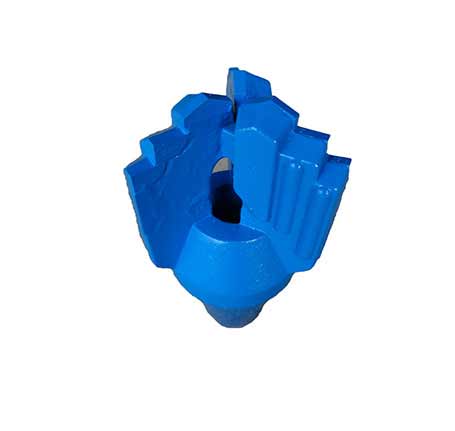
Steel tooth tricone bits, often referred to as milled tooth bits, feature teeth machined directly into the steel cone body. Unlike Tungsten Carbide Insert (TCI) bits which rely on crushed rock, steel tooth bits operate by gouging and scraping. The shearing action is highly effective in softer formations where the rock fails under lower compressive stress.
.jpg "tricone_bit_(15).jpg")
When Should You Choose a Steel Tooth Bit Over a TCI Bit?
The primary decision factor for B2B procurement managers and drilling engineers is the IADC classification system. For soft formations (IADC 11x, 12x, 13x series), steel tooth bits offer a faster ROP at a lower initial capital investment than TCI bits.
| Feature | Steel Tooth (Milled) | TCI (Insert) |
|---|
| Formation | Soft to Medium-Soft | Medium to Ultra-Hard |
| Mechanism | Gouging/Scraping | Crushing/Indenting |
| Cost | Lower | Higher |
| Application | Top-hole, Water Well | Deep Oil & Gas, Mining |
Critical Factors in Steel Tooth Bit Longevity
At GREAT, we leverage our 86,000 m² manufacturing facility to implement advanced heat treatment and hard-facing technologies. The longevity of a three cone drill bit is determined by:
Hard-Facing Application: The application of tungsten carbide welding material on the leading edge of the tooth is the primary defense against abrasive wear.
Bearing Integrity: In high-speed drilling, bearing heat is the enemy. We utilize precision-engineered friction bearings with advanced metallurgical coatings to ensure consistent operation.
Hydraulic Optimization: Proper nozzle selection ensures efficient bottom-hole cleaning, preventing the "re-drilling" of cuttings which accelerates tooth wear.
Optimizing Drilling Parameters for Maximum ROP
Achieving the best performance requires balancing WOB and RPM. In soft formations, high ROP is achieved by pushing the teeth deep into the formation. If the WOB is too low, the teeth will only polish the formation, leading to premature 'flat-topping' of the teeth and increased torque fluctuations.
Real-World Applications: From HDD to Water Wells
Our steel tooth tricone bits are widely deployed in Horizontal Directional Drilling (HDD) projects and large-diameter water well drilling. The ability to customize the cutting structure based on specific rock analysis allows our clients to maintain consistent ROP across varying geological profiles. For instance, in unconsolidated clay deposits common in water well projects, a more aggressive, longer-tooth design is recommended to prevent bit balling.
Expert Insight: The Role of Five-Axis CNC in Bit Consistency
Many industry issues stem from non-uniform tooth profiles, leading to uneven loading on the cone. Our 86,000 m² facility employs five-axis CNC machining centers to ensure every tooth on the cone is perfectly indexed. This precision reduces vibration and increases the mechanical energy delivered to the rock, directly enhancing the bit's service life.
Conclusion
Selecting the right steel tooth tricone bit is a balance of geological assessment and operational precision. By partnering with a manufacturer that combines metallurgical expertise with advanced production capabilities, you can ensure your drilling operations remain efficient and cost-effective. Contact GREAT technical team today for a custom bit recommendation based on your specific project requirements.
FAQ
What is the typical IADC range for steel tooth bits?
Steel tooth tricone bits typically fall within the IADC 111 to 137 range, designed for soft to medium-soft formations.
How do I identify when a steel tooth bit needs to be pulled?
Look for signs of excessive tooth wear (flat-topping), bearing failure (indicated by noise or uneven rotation), or a consistent decrease in ROP despite maintaining optimal WOB and RPM.
Can steel tooth bits be used in hard rock?
It is not recommended. Steel teeth are prone to brittle fracture or rapid rounding when subjected to high-compressive strength, abrasive rock types like granite or chert.
Why is hard-facing important?
Hard-facing provides a wear-resistant layer on the teeth, significantly extending the life of the bit in abrasive environments by protecting the underlying base steel.
How does GREAT ensure quality?
We are a qualified supplier to major oil companies (CNPC, SINOPEC, CNOOC), operating under stringent quality control protocols that include metallurgical analysis and load testing for every batch.
 English
 français
 Deutsch
 Español
 italiano
 русский
 português
 العربية
 tiếng việt
 ไทย
ไทย Nederland