1. Introduction
Roller cone bits are among the most versatile drilling tools in the oil, gas, mining, and water well industries. Their performance, however, depends heavily on choosing the right bit for the specific rock formation. Selecting an unsuitable bit can lead to slow penetration rates, excessive wear, premature failure, and increased drilling costs. The optimal bit type is determined by formation hardness, abrasiveness, compressive strength, and other geological factors.
2. Classification of Rock Formations
Soft Formations
Examples: clay, shale, soft limestone.
Characteristics: low compressive strength, high plasticity, tendency to ball up.
Medium Formations
Examples: medium limestone, dolomite, sandstone.
Characteristics: moderate hardness, balanced wear resistance.
Hard Formations
Examples: granite, chert, basalt.
Characteristics: high compressive strength, brittle fracture, slower drilling rates.
Abrasive Formations
Examples: quartz-rich sandstone, conglomerates.
Characteristics: high wear on cutting structure and bit body.
3. Roller Cone Bit Basics
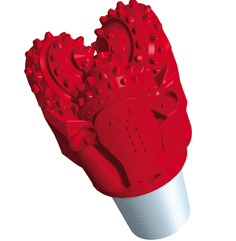
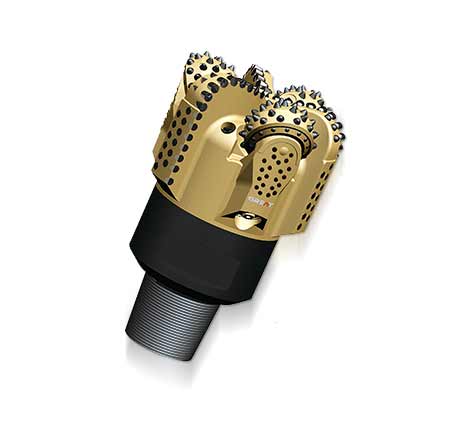
A roller cone bit consists of:
Cutting structure: either milled steel teeth or tungsten carbide inserts (TCI).
Bearings: journal bearings or roller bearings, often sealed for durability.
Cones: rotate independently to crush and gouge the rock.
Tooth Types:
Milled Tooth Bits – best for soft formations; feature large, widely spaced teeth for high penetration.
Tungsten Carbide Insert (TCI) Bits – suited for harder formations; small, strong teeth resist breakage.
IADC Classification System:
First digit (1–8): formation hardness (1 = softest, 8 = hardest).
Second digit: tooth type (1–4 = milled tooth; 5–8 = TCI).
Third digit: specific bearing and gauge protection features.
4. Bit Selection for Different Formations
Soft Formation
Recommended Bit: Large, long, widely spaced milled tooth bits.
Features: High penetration rate, efficient cutting, minimal balling.
IADC Code: 1–3 (milled tooth).
Medium Formation
Hard Formation
Recommended Bit: TCI bits with small, short, closely spaced inserts.
Features: High durability, resistance to tooth breakage.
IADC Code: 7–8 (TCI).
Abrasive Formation
Recommended Bit: Wear-resistant inserts, hardfaced shirttails, sealed bearings.
Features: Enhanced erosion resistance, extended bit life.
IADC Code: Varies—choose based on hardness plus high wear resistance.
5. Performance Considerations
Weight on Bit (WOB): Soft formations tolerate higher WOB; hard formations require controlled WOB to prevent damage.
Rotational Speed (RPM): Higher RPM for soft formations, lower RPM for hard formations.
Drilling Fluids: Use adequate flow rate for cooling, cleaning, and reducing balling in sticky clays.
6. Common Mistakes in Bit Selection
Using soft formation bits in hard formations → tooth breakage, rapid failure.
Using hard formation bits in soft formations → slow drilling, bit balling.
Ignoring IADC codes and relying solely on past experience.
7. Quick Reference – IADC Code Selection Guide
| Formation Type | Recommended Bit Design | Tooth Type | IADC Code Range |
|---|
| Soft | Large, long, spaced steel teeth | Milled Tooth | 1–3 |
| Medium | Medium-sized tungsten carbide inserts | TCI | 4–6 |
| Hard | Small, short tungsten carbide inserts | TCI | 7–8 |
| Abrasive | Wear-resistant inserts, hardfacing | TCI / Milled Tooth | Depends on hardness |
8. Conclusion
Choosing the right roller cone bit is not guesswork—it is a calculated decision based on formation hardness, abrasiveness, and operational parameters. Correct bit selection can improve penetration rates, reduce costs, and extend bit life. Always consult IADC codes and adapt to real-time drilling data to achieve the best results.
 English
 français
 Deutsch
 Español
 italiano
 русский
 português
 العربية
 tiếng việt
 ไทย
ไทย Nederland