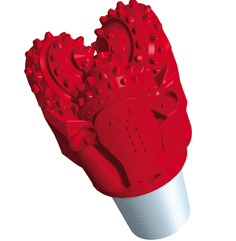
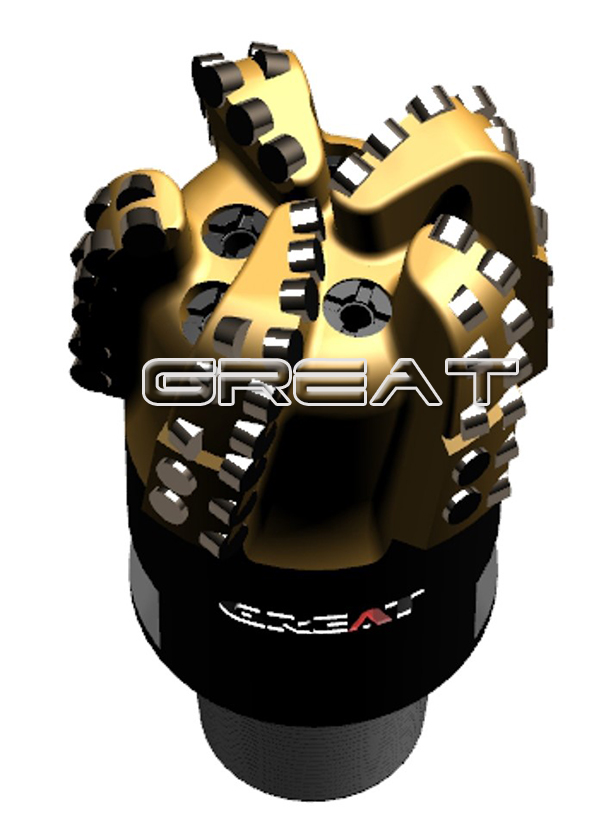
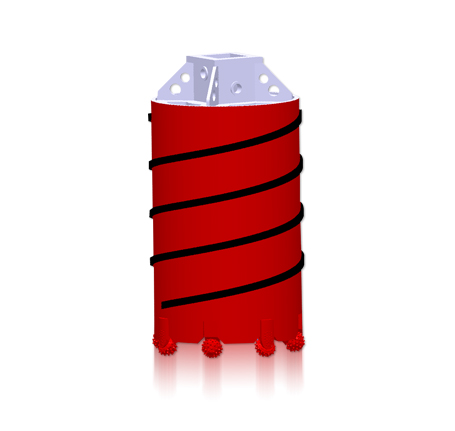
BLUF: To achieve optimal penetration rates in granite, you must utilize TCI (Tungsten Carbide Insert) tricone bits with aggressive, chisel-shaped or conical inserts, paired with high-performance sealed journal bearings. The hardness and abrasive nature of granite require specialized metallurgy and wear-resistant carbide grades to prevent premature tooth loss and bearing failure.
Key Takeaways for Drilling Granite
Select the Right IADC Code: Granite typically requires IADC 6xx to 7xx series bits, categorized by high wear resistance and impact toughness.
Prioritize Bearing Integrity: Granite drilling generates intense heat; ensure bits feature metal-to-metal seals or premium elastomer seals to prevent bearing seizure.
Optimize WOB and RPM: High-density granite demands sufficient Weight on Bit (WOB) to engage cutters, but excessive RPM can accelerate abrasive wear on the bit gauge.
Material Quality Matters: Utilize bits manufactured with high-grade steel and advanced diamond-enhanced inserts to withstand granite's compressive strength (typically 200–300 MPa).
For a complete Tricone Drill Bit Guide here.
Why Is Granite Considered the Most Challenging Formation?
Granite is an igneous, crystalline rock composed primarily of quartz, feldspar, and mica. With a high compressive strength and significant abrasivity, it acts as a "grinding" medium for any drilling tool. Unlike sedimentary rocks like limestone or shale, granite does not fracture easily; instead, it requires the bit to crush the rock through high-point loading. In drilling engineering terms, this formation is characterized by low drillability and high energy consumption.
How to Select the Best Tricone Bit for Granite
When selecting a tricone bit for granite, the IADC (International Association of Drilling Contractors) classification system is your primary guide. For crystalline granite, the focus is on TCI (Tungsten Carbide Insert) rather than steel-tooth bits, as the latter would experience rapid abrasive wear.
GREAT manufactures high-performance TCI bits specifically engineered for the hard, abrasive conditions of mining and deep foundation drilling. Our engineering team recommends selecting based on the following criteria:
| Feature | Recommendation for Granite | Why? |
|---|
| IADC Code | 637 - 737 | Hard, abrasive formation compatibility |
| Bearing Type | Sealed Journal Bearing | High heat/load resistance |
| Insert Shape | Conical or Chisel | Distributes load while resisting fracture |
| Gauge Protection | Enhanced Diamond/Carbide | Prevents premature hole-size reduction |
TCI vs Steel Tooth Tricone Bits
The Role of Bearing Systems in Hard Rock
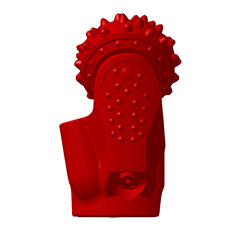
In granite, the bearing system is often the first point of failure. Because granite is non-porous and incredibly hard, the drilling process generates extreme friction and heat. At GREAT, we utilize advanced metallurgical processes and CNC machining to ensure our sealed journal bearings maintain oil pressure even at high temperatures. Proper lubrication is the lifeblood of a tricone bit; when the seal fails, debris enters the bearing race, leading to rapid catastrophic failure.
.jpg "tricone_bit_(1).jpg")
Technical Insights: Optimizing ROP in Granite
Rate of Penetration (ROP) in granite is a function of weight on bit (WOB), rotational speed (RPM), and hydraulics. Since granite is extremely hard, simply adding weight is not the solution—it often leads to insert breakage. Instead, focus on:
WOB Control: Maintain a steady, consistent weight to allow the carbide inserts to crush the rock without suffering impact fatigue.
Hydraulic Efficiency: Use nozzle configurations that ensure rapid chip removal. If cuttings remain in the hole, the bit will "re-drill" the rock, leading to excessive heat and accelerated abrasive wear.
Bit Selection: Use bits with premium diamond-enhanced inserts which maintain sharpness far longer than standard tungsten carbide, reducing the number of trips required.
Common Tricone Bit Failures in Granite
Identifying why a bit failed is critical for continuous improvement. Common failure modes include:
Insert Chipping/Fracture: Caused by improper WOB or hitting hard crystalline inclusions at excessive RPM.
Bearing Seizure: Usually the result of extreme heat accumulation or seal failure.
Gauge Wear: Occurs when the bit drifts or lacks sufficient diamond-enhanced protection on the heel row, resulting in an under-gauge hole.
Why Global Contractors Choose GREAT
Since 2010, GREAT has served as a key supplier for projects involving deep mining exploration and large-diameter hole opening in hard rock. Our 86,000 m² manufacturing facility in Hebei, China, is equipped with five-axis CNC systems that allow us to manufacture bits to the most rigorous tolerances. We are a trusted partner to SINOPEC and CNPC, having proven our performance in the world’s most challenging geology.
.jpg "tricone_bit_(2).jpg")
Optimize Your Drilling Performance Today
Granite drilling demands precision, durability, and expert engineering. GREAT provides not just high-quality tricone bits, but full drilling solutions tailored to your specific geological formation. Contact our technical team today for a bit selection audit or to request a catalog of our high-performance drilling tools.
Contact GREAT for a Quote on Granite-Rated Tricone Bits
FAQ: Drilling Granite with Tricone Bits
Can I use a steel-tooth bit for granite?
No. Steel-tooth bits will experience rapid abrasive wear in granite, leading to total tooth loss within a few hours. Always use TCI (Tungsten Carbide Insert) bits for hard rock.
How do I prevent bit gauge wear in abrasive granite?
Ensure your bit is equipped with enhanced gauge protection, specifically diamond-enhanced inserts or additional hard-facing on the heel row.
What is the ideal RPM for drilling granite?
Generally, lower RPM is preferred for granite to avoid excessive heat generation and impact damage to the inserts. Consult your bit's specific operational datasheet, typically ranging between 60–100 RPM depending on bit size.
How does coolant flow affect bit life?
Proper coolant (mud/air) flow is essential for heat dissipation and chip removal. In granite, poor hole cleaning leads to 'bit balling' or regrinding, which significantly reduces the effective life of the tungsten carbide inserts.
Why are sealed bearings important?
Sealed bearings prevent the ingress of abrasive rock cuttings into the bearing race. In granite, even a small amount of grit can cause the bearing to seize, leading to a downhole failure and an expensive fishing job.
 English
 français
 Deutsch
 Español
 italiano
 русский
 português
 العربية
 tiếng việt
 ไทย
ไทย Nederland