Introduction: Why Thread Size Matters in RC PDC Drilling
In reverse circulation (RC) drilling, the thread connection between the RC PDC bit and the drill string plays a far more critical role than many operators realize. Even the highest-quality PDC cutters can underperform—or fail prematurely—if the thread size or connection standard is incorrect.
Thread mismatch can lead to:
Torque loss
Excessive vibration
Connection loosening
Cutter and body damage
This guide explains RC PDC bit thread sizes, API standards, and how to select the correct connection for your drilling system, helping you avoid costly mistakes in the field.
What Thread Size Is Used on RC PDC Bits?
Short answer:
Most RC PDC bits use API standard threads, but the exact size and configuration depend on the RC hammer, drill pipe, and torque requirements.
RC drilling generates:
Because of this, thread strength and compatibility are just as important as cutter quality.
Common RC PDC Bit Thread Standards
API Thread Standards (Most Widely Used)
The majority of RC PDC bits follow API Spec 7-1 thread standards.
RC PDC Bit Thread Size Chart
| Thread Type | API Standard | Typical RC Application | Notes |
| API REG (Regular) | API Spec 7-1 | Light to medium RC drilling | Easy makeup, limited torque |
| API IF (Internal Flush) | API Spec 7-1 | Medium to high torque RC | Better stress distribution |
| API FH (Full Hole) | API Spec 7-1 | Heavy-duty RC drilling | Maximum strength |
| Custom OEM Threads | Non-standard | Specific RC hammer systems | Made to order |
Industry Tip: API IF and FH threads are generally preferred for RC PDC bits due to higher torque resistance and reduced fatigue risk.
Pin vs Box: Understanding RC PDC Bit Connections
RC PDC bits are typically supplied with a pin connection, designed to mate directly with the RC hammer or adapter sub.
Key Considerations:
Pin length: Affects torque transfer
Shoulder contact: Ensures proper load distribution
Thread taper accuracy: Prevents loosening during drilling
A poorly machined thread shoulder can cause micro-movement, leading to:
Premature wear
Heat buildup
Cracked bit bodies
How to Choose the Right Thread Size for Your RC PDC Bit
1. Match the RC Hammer Specification
Always confirm:
Hammer model
Recommended thread type
Maximum torque rating
2. Consider Formation Hardness
Hard and abrasive formations generate higher torque, making API IF or FH threads a safer choice.
3. Account for Hole Depth
Deeper RC drilling increases:
Rotational stress
Thread fatigue
Stronger thread profiles reduce the risk of connection failure over long runs.
Common Thread Selection Mistakes (and How to Avoid Them)
X Mistake 1: Choosing Based on Availability Only
Not all API threads perform equally under RC drilling conditions.
X Mistake 2: Ignoring Torque Ratings
A thread that works for conventional drilling may fail in RC applications.
X Mistake 3: Improper Make-Up Torque
Over- or under-torquing can damage threads and compromise safety.
How Thread Design Affects RC PDC Bit Performance
Thread quality directly impacts:
Torque transmission
Bit stability
Cutter wear patterns
A stable connection reduces vibration, allowing PDC cutters to:
GreatDrillbit RC PDC Bit Thread Advantages
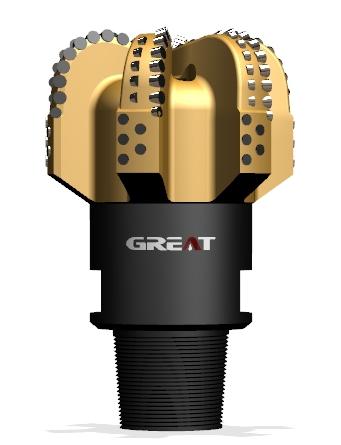
GreatDrillbit RC PDC bits are engineered with precision-machined API threads designed specifically for RC drilling environments.
Key Features:
API REG / IF / FH threads available
Tight shoulder tolerances for enhanced stability
Reinforced bit body to handle high torque
Custom thread options for OEM RC hammer systems
Each RC PDC bit is manufactured to ensure secure makeup, reduced vibration, and long service life, even in demanding formations.
Product link:
https://www.greatdrillbit.com/product/rc-pdc-bit.html
Thread Maintenance Best Practices
To maximize RC PDC bit lifespan:
Clean threads before makeup
Apply proper thread compound
Use calibrated torque tools
Inspect shoulders for wear after each run
Preventive maintenance significantly reduces the risk of downhole failures.
Final Thoughts: The Right Thread Is a Safety Decision
Selecting the correct RC PDC bit thread size is not just a compatibility issue—it is a safety and performance decision. Proper thread selection ensures:
Stable drilling
Longer bit life
Better sample recovery
Reduced downtime
By understanding API standards and matching threads to your drilling conditions, you can unlock the full potential of your RC PDC bit.
GreatDrillbit’s RC PDC bits are built with robust connection standards that give drillers confidence in every run—no matter the formation or depth.
 English
 français
 Deutsch
 Español
 italiano
 русский
 português
 العربية
 tiếng việt
 ไทย
ไทย Nederland