A hybrid drill bit combines fixed PDC cutters with roller cones to address formations that challenge either cutting system on its own. PDC blades shear softer rock, while cones crush harder or more abrasive intervals. This dual action can make drilling response more manageable across changing lithology, but it does not guarantee that stick-slip will disappear. Bit design, formation, drilling parameters, and the entire bottom-hole assembly all matter.
For drilling optimization managers and well teams, the practical question is whether the mixed cutting structure fits the interval better than a PDC or roller-cone bit alone. The sections below explain the mechanisms, operating considerations, and screening criteria to help answer that question.
What Is a Hybrid Drill Bit and Why Was It Invented?
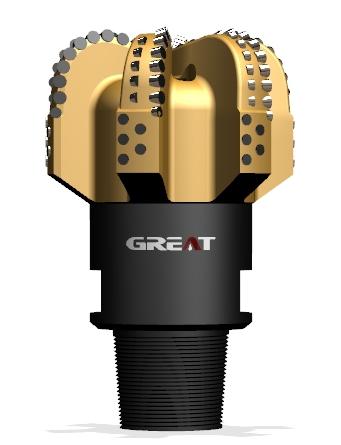
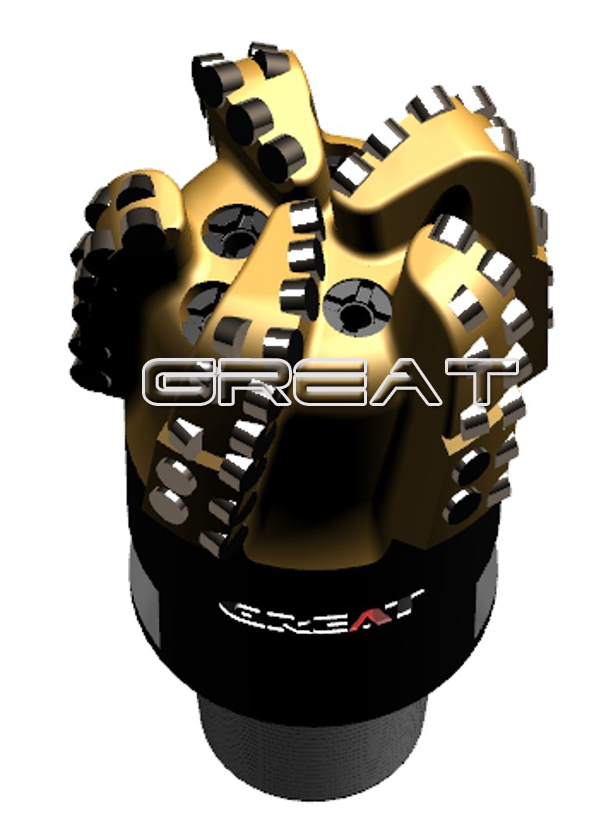
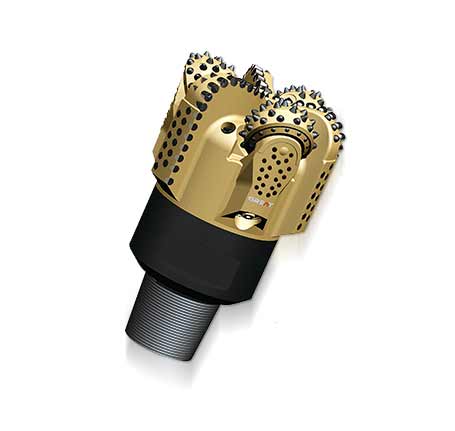
A hybrid drill bit is a fixed-cutter and roller-cone bit in one assembly. Its PDC blades use diamond compact cutters to remove rock mainly by shearing. Its roller cones rotate against the formation and use teeth or inserts to crush and fracture rock. The exact layout and cutting elements depend on the bit design.
The engineering rationale is to combine complementary rock-breaking actions where a well passes through variable formations. A conventional PDC bit can drill efficiently in suitable, relatively consistent formations, but hard stringers, abrupt lithology changes, or vibration-sensitive conditions may make its response less predictable. A roller-cone bit can break hard rock through crushing and impact, but may not deliver the same shearing action in softer sections. A hybrid aims to let both systems contribute in the same interval.
This is not simply a PDC bit with a cone added. The bit must balance cutter exposure, cone placement, gauge behavior, hydraulic cleaning, and load distribution. If one cutting system dominates or the geometry is poorly matched to the formation, the theoretical benefit of the combination may not appear in drilling data.
Hybrid bits are sometimes described as a PDC tricone hybrid bit or a dual cutting action bit. Those labels describe the broad combination, not a universal design specification. When comparing a Kymera hybrid bit alternative, for example, evaluate the actual diameter, connection, cutting structure, operating envelope, and evidence from comparable formations rather than relying on category names alone.
Dual Cutting Mechanisms: Roller Cones Crush Hard Rock, PDC Blades Shear Matrix
The bit’s cutting systems engage the bottom of the hole at different locations and contact conditions. They operate together as the bit rotates, but they are not mechanically timed to strike in a fixed sequence. Their relative contribution changes with rock strength, cutter and cone geometry, bit loading, and drilling conditions.
PDC cutters shear softer and more drillable rock
PDC cutters remove rock as the bit turns and the cutters move across the formation. When the formation is suitable and the cutter engages at an appropriate depth, this shearing action can produce efficient cutting. In a hybrid, PDC blades can continue cutting softer matrix around or between harder features that resist straightforward shearing.
Roller cones crush harder or abrasive features
Roller cones rotate as the bit turns. Their teeth or inserts load the formation through contact, crushing, and fracture. This action can be useful when the bit crosses a hard stringer that could cause a fixed-cutter structure to experience abrupt changes in engagement. The suitability depends on the cone structure and the rock; “hard” alone is not enough to specify a bit.
In an interbedded interval, cones may break more resistant layers while PDC cutters shear the softer material. That division of work is a design objective, not a guarantee that each component will exclusively cut one rock type. Both structures can encounter changing loads as the bit crosses bedding, transitions, and fractures.
Torsional Stability: Eliminating Destructive Stick-Slip and High Torque Spikes
Stick-slip is a torsional drilling vibration in which the bit and drillstring alternately slow or stop and then release stored rotational energy. It can produce large changes in instantaneous bit speed and torque. It is a system-level problem influenced by the bit-rock interaction, drilling parameters, drillstring, downhole tools, and surface control. Changing the bit may help, but no bit type can be said to eliminate stick-slip under all conditions.
A hybrid may help manage torsional variation when its combined cutting structure handles a changing formation more steadily than a poorly matched single-mechanism bit. The cones can engage harder features through crushing, while PDC cutters continue shearing softer rock. In a suitable design and application, this can moderate abrupt changes in cutting resistance at lithology boundaries. The actual result must be assessed from downhole and surface data.
Do not assume that adding cones automatically reduces torque. Cone engagement, cutter aggressiveness, weight on bit (WOB), rotary speed, formation anisotropy, and bottom-hole assembly dynamics can all affect torque response. A hybrid that is overloaded, hydraulically under-cleaned, or mismatched to the formation can still experience vibration, torque fluctuations, or inefficient drilling.
For a fair assessment, compare torque and RPM trends alongside WOB, rate of penetration (ROP), vibration indicators, drilling events, and formation changes. If available, review downhole measurements rather than relying only on surface averages, which can hide short-duration variations. Make one controlled change at a time where operationally practical, and coordinate bit selection with the drilling and directional teams.
Superior Performance in Interbedded Carbonate, Sandstone, and Shale Sequences
Carbonate, sandstone, and shale are broad rock categories, not bit-selection specifications. Their strength, abrasiveness, cementation, bedding, and degree of fracturing vary widely. A hybrid is a candidate when the actual interval repeatedly alternates between rock that favors shearing and features that require more impact or crushing action.
Carbonate sequences: A well may encounter layers with different strength, cementation, or fracture behavior. Assess the hard layers and transitions rather than assuming all carbonate requires a cone-based solution.
Sandstone intervals: Grain size, cementation, and abrasiveness influence cutter wear and rock response. A hybrid may be worth evaluating where competent or abrasive beds alternate with softer material.
Shale sequences: Shale strength and behavior vary with composition, bedding, and drilling conditions. A hybrid is not automatically preferred for shale; assess the full interval, including adjacent stringers and the risk of vibration or bit dysfunction.
The strongest candidate is usually an interval where variability is operationally important and is supported by offset-well evidence or reliable formation interpretation. If one rock type dominates and a conventional PDC or roller-cone bit has performed consistently, changing to a hybrid may add complexity without a clear benefit. The objective is improved whole-interval performance, not the highest possible instantaneous ROP in one lithology.
Weight on Bit (WOB) and Hydraulic Flow Balancing for Hybrid Systems
WOB and hydraulics must suit the complete cutting structure. Too little WOB can prevent effective engagement and reduce cutting efficiency. Excessive or unstable loading can increase mechanical stress and worsen vibration, especially when the bit crosses hard beds. There is no responsible universal WOB value for hybrid bits: use the bit manufacturer’s operating guidance and confirm compatibility with the rig, drillstring, formation, and downhole assembly.
Rotary speed also affects how frequently cutters and cones contact the formation and how the bit responds to changing rock. Establish operating parameters within the specific bit and BHA limits, then monitor torque, RPM, WOB, ROP, vibration, and drilling fluid returns. Adjustments should follow the observed dysfunction and operational constraints, not a generic target copied from another well.
Hydraulic design must deliver adequate flow and cleaning around both fixed cutters and cones. Nozzle configuration, flow area, fluid properties, available pump pressure, and cuttings transport all require review. Poor cleaning can allow cuttings to recirculate or accumulate near the cutting structure; excessive pressure loss or unsuitable flow allocation can also constrain the drilling system. Confirm nozzle and hydraulic details with the bit supplier and the drilling hydraulics plan.
Before running the bit, verify the hole diameter, connection, BHA clearance, rig and pump capability, and any directional or downhole tool constraints. These checks are especially important when replacing a different bit design: nominal diameter alone does not confirm full assembly compatibility.
Candidate Well Selection Matrix for Hybrid Bit Deployment
Use the following matrix as an initial screening tool, not as a substitute for detailed engineering review. A “strong candidate” means the hybrid concept merits evaluation against offset performance and the supplier’s design options.
| Well or interval evidence | Hybrid candidacy | What to verify |
|---|
| Frequent hard stringers within softer, drillable beds | Strong candidate for evaluation | Stringer thickness, strength contrast, offset bit response, and expected cutter/cone engagement |
| Repeated changes in lithology associated with unstable torque or vibration | Potential candidate | Confirm the dysfunction source; review downhole data, BHA behavior, and parameter history |
| Uniform formation with reliable performance from one bit type | Lower priority | Establish a specific operational reason to change from the proven design |
| Highly abrasive or fractured interval with uncertain bit durability | Case-specific | Review abrasiveness, fracture conditions, wear risks, and suitable bit construction |
| Limited hydraulics, restricted WOB, or unresolved BHA compatibility | Do not select until resolved | Check operating limits, pump capacity, connection, clearance, and supplier recommendations |
Build the selection case from well data
Start with the planned interval and offset records. Map lithology, depth of transitions, compressive strength where available, abrasiveness, fracture or fault information, and prior bit runs. Then identify the actual drilling problem: poor ROP, excessive torque variation, premature wear, repeated trips, or unstable drilling across transitions. A hybrid should address a defined problem, not just a broad description such as “mixed formation.”
Next, compare candidate designs on the same basis. Confirm hole size, connection, cutting structure, gauge protection, hydraulic configuration, and operating recommendations. Agree in advance which outcomes will be reviewed, such as interval footage, ROP trend, torque behavior, vibration, wear after the run, and any nonproductive time. Do not attribute a performance change to the bit alone if parameters, BHA, or formation also changed.
For a project-specific review, provide the planned hole and bit diameters, connection, formation description, offset drilling data, WOB and RPM history, hydraulic limits, and BHA details. GREAT manufactures drilling tools for oil and gas, water wells, mining, HDD, foundation, and geothermal applications. Its manufacturing facility in Hebei, China, covers approximately 86,000 m² and uses CNC machining, five-axis systems, and specialized diamond-processing lines. Discussing these operating details with the supplier helps determine whether a hybrid design is a realistic candidate for the interval.
Review GREAT hybrid drill bit options and share the well conditions with the engineering team when requesting a project-specific recommendation. The right decision is the bit whose cutting structure, hydraulics, and operating envelope match the formation and the drilling system—not a promise that any one design will eliminate stick-slip.
 English
 français
 Deutsch
 Español
 italiano
 русский
 português
 العربية
 tiếng việt
 ไทย
 Nederland