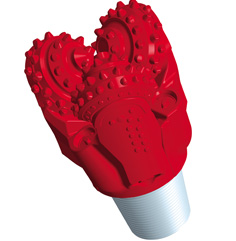
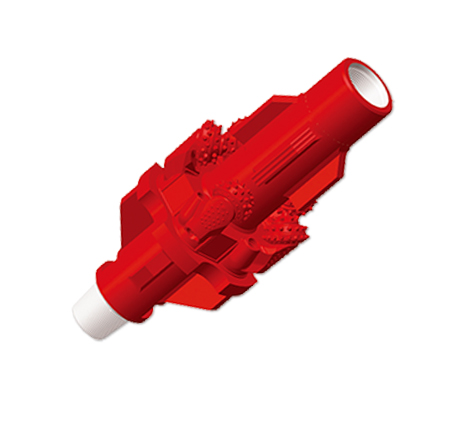
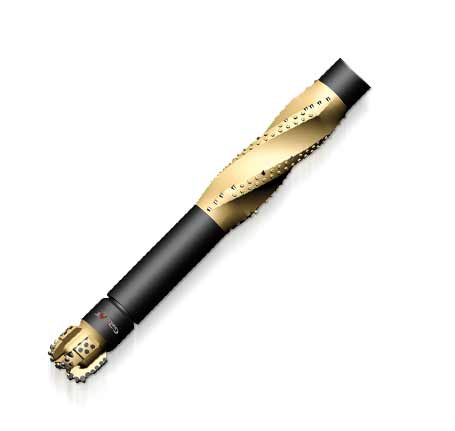
Geothermal well drill bits must match both the rock and the temperature history they will experience. Deep geothermal drilling can expose cutters, bearings, seals, and drilling fluids to high temperatures, abrasive solids, fractured formations, and repeated changes in operating conditions. A bit described as “high temperature” is not automatically suitable above 200°C: the complete bit design must be qualified for the expected temperature, pressure, fluid chemistry, load, and run duration.
This guide explains how to assess tricone seal systems and PDC cutter thermal risks, and how to select a cutting structure for granitic basement, rhyolite, and hydrothermally altered rock. It closes with a practical specification audit for geothermal project engineers and drilling contractors.
The Extreme Demands of Deep Geothermal Drilling: Heat, Pressure, and Abrasive Fluids
Geothermal drilling conditions vary substantially by field, depth, circulation strategy, and well design. The temperature at the bit is not necessarily the undisturbed formation temperature. Circulating fluid can cool the bottom hole, while a connection, circulation interruption, or trip can allow the well and tools to heat up again. Engineers should therefore consider both operating temperature and thermal transients, rather than relying on a single temperature figure.
Temperature affects different bit components in different ways. It can reduce the usable performance margin of elastomer seals, alter lubricant behavior, increase thermal stress in cutter assemblies, and accelerate damage where heat combines with vibration or poor cleaning. Downhole pressure adds mechanical load and can influence how seal systems operate. Abrasive particles in the circulating fluid and formation cuttings also wear exposed surfaces and can impair bearing or cutting-structure performance if they reach protected interfaces.
The rock presents a separate set of demands. Hard, abrasive basement can increase cutter wear and torque. Fractures and interbeds can cause impact loading and bit vibration. Altered or broken rock may drill more easily in some intervals but can create unstable hole conditions, uneven loading, and rapid changes in cutting response. These conditions make a single “best geothermal bit” recommendation unreliable without formation and operating data.
Separate formation temperature from bit operating temperature
For bit selection, record the estimated formation temperature, expected circulating bottom-hole temperature, maximum anticipated temperature during static periods, and likely duration of each exposure. Also document pressure, mud type, solids content, fluid chemistry, flow rate, and expected circulation interruptions. These details help distinguish a short thermal excursion from sustained service at elevated temperature.
When reviewing drilling tools for geothermal well applications, use the well’s actual operating envelope as the starting point. A bit’s nominal diameter and cutter type do not by themselves confirm its suitability for a specific geothermal interval.
High-Temperature Bearing Seals: Fluoroelastomers and Metal-to-Metal Solutions in Tricones
In a sealed-bearing tricone bit, the seal helps retain lubricant and restrict drilling fluid and solids from entering the bearing system. At elevated temperature, seal selection becomes a materials-compatibility and system-design question—not simply a choice of an elastomer with a high published temperature rating.
Fluoroelastomer (FKM) compounds are used in some demanding sealing applications because they can offer useful heat and chemical resistance. However, performance depends on the exact compound, seal geometry, pressure, fluid chemistry, extrusion gap, and exposure duration. A generic FKM designation does not prove suitability for continuous service above 200°C. The bit manufacturer should confirm the compound and the validated operating envelope for the actual drilling fluid and duty cycle.
Metal-to-metal seal designs avoid relying on an elastomer as the primary sealing interface, but they are not automatically immune to temperature-related failure. Face condition, contact loading, alignment, lubrication, material pairing, and contamination all matter. High temperature can also affect lubricant and component clearances. Metal sealing systems therefore require qualification as a complete bearing assembly, not evaluation by seal material alone.
Compare the whole bearing system, not just the seal material
Before specifying a high temp tricone bit, ask the supplier to identify the bearing and seal architecture, lubricant approach, temperature limits, and any restrictions on fluid chemistry or operating duration. Confirm whether the stated limit applies to continuous operation, a brief excursion, or a laboratory material rating. These are not interchangeable conditions.
Temperature: Request the qualified continuous and transient limits for the complete bearing-seal assembly.
Fluid compatibility: Confirm compatibility with the planned mud, additives, brine, and anticipated contaminants.
Pressure and loading: Review expected bottom-hole pressure, WOB, rotary speed, and impact or vibration exposure.
Failure evidence: Agree on how seal damage, lubricant loss, bearing wear, and cone retention will be inspected after the run.
If the well plan includes exposure above 200°C, obtain written confirmation of the tricone’s application limits and any test basis. Do not infer a bit’s downhole capability from a seal polymer’s datasheet alone.
Thermal Stress Mitigation in PDC Cutters: Managing Differential Expansion and Graphitization
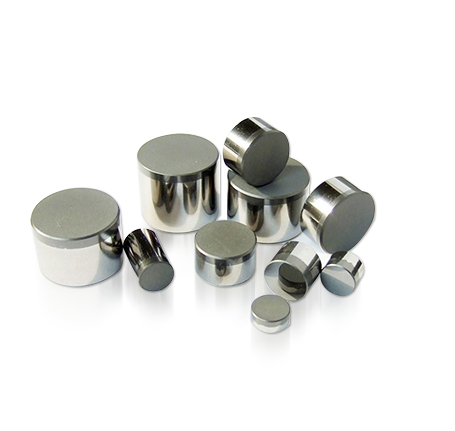
A PDC drill bit cuts rock by shearing it with fixed polycrystalline diamond compact cutters. Each cutter combines a diamond table with a supporting substrate, commonly cemented carbide. During drilling, friction at the cutter-rock interface generates localized heat. High bulk temperature, frictional heating, and intermittent cooling can combine to create thermal gradients within the cutter and its attachment.
Diamond and its supporting materials do not expand identically. Repeated heating and cooling can therefore stress the cutter assembly and its bond. Thermal shock is especially relevant when a hot cutter is suddenly exposed to cooler fluid, or when operating conditions create rapid swings in frictional heat. The result may be cracking, loss of cutter integrity, or accelerated wear, although the actual failure mode depends on cutter construction, exposure, loading, and fluid conditions.
At sufficiently severe temperature and under relevant chemical and pressure conditions, diamond can become more vulnerable to degradation, including conversion toward graphite. There is no single field threshold that predicts failure for every PDC cutter: cutter design, exposure time, atmosphere, pressure, and heat generation all affect the outcome. Avoid treating “graphitization temperature” as a universal bit operating limit.
Control heat generation as well as heat exposure
A geothermal PDC bit should be selected around the formation and the complete drilling system. Cutter size, cutter density, blade count, back-rake, gauge protection, and hydraulic layout influence engagement, torque, stability, and cleaning. A design that is too aggressive for fractured rock may increase impact damage; a conservative design may reduce cutting efficiency in competent rock. The appropriate balance depends on compressive strength, abrasiveness, fracture frequency, rig capability, and the planned WOB and rotary speed.
To reduce avoidable thermal stress, maintain effective circulation and avoid operating outside the bit’s recommended load and speed envelope. Monitor torque, vibration, ROP, and return flow for changes that may indicate poor cleaning, cutter damage, or a changing formation. If a run involves long static periods or repeated circulation interruptions, include those thermal cycles in the cutter qualification discussion.
Matrix-body and steel-body PDC bits also differ in body construction and erosion resistance. Neither construction is universally preferable for geothermal service. Selection should account for abrasive solids, hydraulic erosion risk, hole size, drilling assembly, and whether the interval is competent or fractured. Ask the manufacturer to explain how the proposed cutter and body design address the expected failure modes.
Drilling in Igneous Bedrock: Granitic Basement, Rhyolite, and Hydrothermal Alteration
Igneous geothermal formations are not one uniform drilling category. Granite may be competent and abrasive, with performance strongly affected by mineral composition, fractures, and local changes in strength. Rhyolite can be hard and abrasive, but its response also depends on texture, alteration, and fracture condition. Hydrothermal alteration can weaken or transform rock locally, producing intervals that differ sharply from adjacent intact formation.
In hard, competent rock, a PDC bit may deliver efficient shearing when cutters remain stable and the hydraulics remove cuttings effectively. In highly fractured or interbedded intervals, impact loading and vibration can make fixed cutters more vulnerable. A tungsten carbide insert (TCI) tricone breaks rock through cone rotation and crushing or chipping action; it may be considered where formation variability or impact loading challenges a fixed-cutter design. These are selection considerations, not universal rules: the correct option depends on the actual interval and the drilling assembly.
Abrasiveness also changes how bit features should be prioritized. Cutter wear resistance and gauge protection matter in abrasive rock, while bit stability and impact resistance become important in fractured ground. Nozzle placement and flow must clean the face without creating an unsuitable hydraulic condition for the rig or formation. The bit must also match the hole diameter, connection, drill string, available torque, and circulation capacity.
Use formation evidence to choose between PDC and tricone designs
Use offset-well records, lithology logs, core descriptions, cuttings, and drilling response to characterize the interval. Review ROP alongside WOB, RPM, torque, vibration, and bit condition; ROP alone cannot distinguish efficient cutting from an unstable or short-lived run. For a long or geologically variable section, discuss whether a single bit design or an interval-specific bit plan better controls trip risk and cost per foot.
For a geothermal PDC bit, specify the target formation, expected abrasiveness, fracture condition, hole size, drilling-fluid properties, and operating envelope. For a tricone, also confirm the bearing and seal design, insert selection, and temperature qualification. In both cases, request a clear explanation of the design trade-offs rather than a broad claim that the bit is suitable for “hard rock.”
Cooling and Lubrication: Drilling Fluid Thermal Management at the Bit Face
Drilling fluid supports bit performance by carrying cuttings away from the face, helping limit local heat accumulation, and—where the bit design uses a lubricated bearing system—working alongside the bearing lubricant and seals. Fluid cannot remove every heat source: frictional heating occurs at the cutter-rock interface, and local conditions may differ from the measured surface return temperature.
Hydraulic design should deliver sufficient cleaning at the bit while staying within pump, drill-string, and wellbore limits. Nozzle configuration and flow affect jet placement and face cleaning. Poor cleaning can allow recutting or accumulation of cuttings, increasing energy consumption and heat. However, simply increasing flow is not a universal solution; the team must consider pressure losses, formation integrity, lost-circulation risk, and the drilling-fluid program.
Plan circulation around the thermal and operational profile. Track inlet and return fluid temperatures where available, alongside flow, standpipe pressure, torque, ROP, and signs of lost circulation. After a shutdown or connection, follow the agreed operating procedure for resuming circulation and loading the bit. Avoid abrupt changes that the drilling program has not assessed, particularly where the tool may have heated during a static period.
Geothermal Bit Specification and Reliability Audit Checklist
Before purchasing or running geothermal well drill bits, make the operating assumptions explicit. A complete review should connect well conditions to bit construction, operating parameters, inspection criteria, and post-run learning.
Define the temperature envelope: Record expected circulating and static temperatures, peak exposure, exposure duration, and likely thermal cycles. State whether the project includes conditions above 200°C.
Describe pressure and fluids: Provide expected pressure, mud type, fluid chemistry, solids and abrasives, additives, and known compatibility concerns.
Characterize the formation: Identify lithology, hardness or strength evidence, abrasiveness, fractures, alteration, interbeds, and anticipated changes with depth.
Confirm bit type and geometry: Specify hole diameter, PDC or tricone preference, cutter or insert requirements, gauge protection, connection, and any dimensional constraints.
Qualify high-temperature components: For tricone bits, request the bearing, seal, and lubricant details and the qualified operating envelope. For PDC bits, review cutter design, thermal exposure assumptions, and the manufacturer’s guidance.
Check hydraulic and rig compatibility: Confirm nozzle and flow requirements against pump capacity, pressure limits, drill-string configuration, available torque, and planned WOB and RPM.
Set operating and monitoring limits: Agree on how the crew will monitor torque, vibration, ROP, flow, pressure, and temperature indicators, and what actions follow abnormal trends.
Plan inspection and feedback: Record dull condition, seal or bearing evidence, cutter damage, gauge wear, operating history, and formation interval so the next bit selection can use field evidence.
For procurement, request the proposed bit’s operating limits, materials or component description relevant to the application, connection and dimensional details, and any restrictions on fluid, temperature, or operating duration. Compare suppliers on whether they can explain the engineering basis for the design and how they will use your well data—not just on the product label.
GREAT manufactures drilling tools for geothermal and other drilling applications, supported by product design, engineering development, CNC machining, five-axis machining, and diamond processing capabilities at its manufacturing facility in Hebei, China. Share the target formation, well temperature profile, hole size, drilling-fluid details, and rig operating limits with the technical team when requesting a project-specific recommendation. The resulting discussion should verify the bit configuration and its application limits against the actual well conditions.
 English
 français
 Deutsch
 Español
 italiano
 русский
 português
 العربية
 tiếng việt
 ไทย
 Nederland