Hard rock drilling is one of the most demanding applications in the drilling industry. Granite, basalt, quartzite, limestone, sandstone, and other abrasive formations can quickly wear down a drill bit, reduce penetration rates, and increase drilling costs.
Choosing the best drill bit for hard rock is therefore not simply about selecting the strongest or most expensive bit. The right choice depends on rock hardness, abrasiveness, formation changes, drilling depth, rig capacity, and operating conditions.
For drilling contractors and equipment buyers, the goal is straightforward: achieve reliable penetration, extend bit life, reduce downtime, and control the total cost per meter or foot drilled.
This guide explains the main drill bit options for hard rock and how to select the right one for your application.
What Is the Best Drill Bit for Hard Rock?
There is no single drill bit that is best for every hard rock formation. However, tricone roller cone bits, PDC drill bits, and specialized diamond bits are commonly considered for hard-rock drilling.
The best option depends on the formation and drilling method.
Tricone Bits for Hard Rock
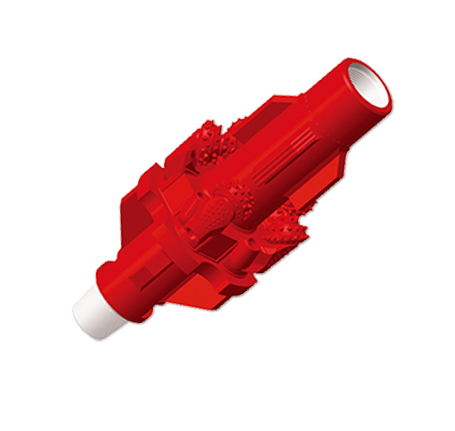
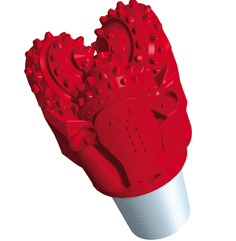
Tricone bits use three rotating cones with cutting structures designed to crush, gouge, and chip the formation.
For hard and abrasive formations, tungsten carbide insert (TCI) tricone bits are widely used. The carbide inserts provide good resistance to impact and wear.
TCI tricone bits are suitable for applications such as:
They are particularly useful when the formation is hard, fractured, or variable.
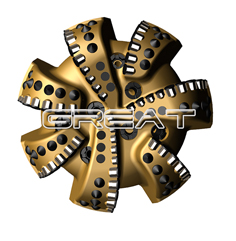
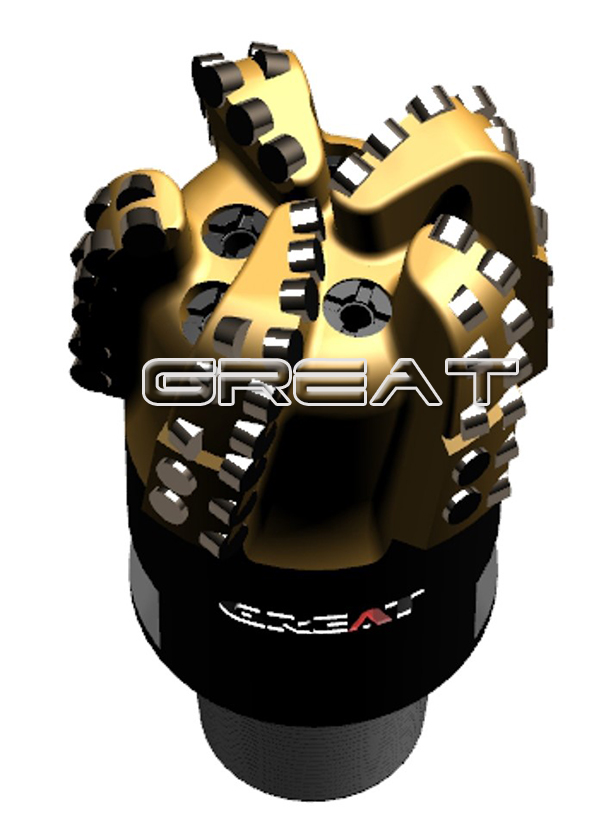
PDC Bits for Hard Rock
PDC bits use fixed cutters made with polycrystalline diamond compact material. Instead of crushing the formation with rotating cones, the cutters shear the rock.
PDC bits can provide high penetration rates when the formation is compatible with the cutter design.
They can work well in certain hard formations, especially when the rock is relatively homogeneous and drilling parameters can be controlled.
However, extremely hard and abrasive rock can create significant cutter wear. Bit design, cutter size, back rake, blade configuration, and hydraulic performance become especially important.
Diamond Bits for Extremely Hard Rock
Diamond drill bits are another option for very hard or abrasive formations.
They are widely used in mineral exploration and core drilling, where obtaining a high-quality rock core is important.
Diamond bits can provide excellent wear resistance and drilling performance, but their cost and application requirements are different from conventional roller cone or PDC bits.
Key Factors When Choosing a Drill Bit for Hard Rock
Before selecting a bit, drilling companies should evaluate the actual formation rather than relying only on general rock classifications.
Rock Hardness and Compressive Strength
Rock hardness has a direct effect on drilling performance.
Soft formations can often be drilled with conventional cutting structures. Hard formations require stronger cutters or inserts and a bit design capable of handling higher loads.
Important geological information may include:
A bit designed for medium-hard limestone may not perform well in highly abrasive granite.
Rock Abrasiveness
Abrasive formations can wear cutting structures much faster than expected.
Quartz-rich sandstone, granite, and some volcanic rocks can be particularly demanding.
When abrasiveness is high, buyers should pay close attention to carbide grade, cutter quality, diamond volume, gauge protection, and overall bit construction.
Formation Stability
Hard rock is not always uniform.
A drilling interval may contain several formations or transition between hard and soft layers. Fractured rock can also create impact loads and vibration.
For these conditions, a bit needs to tolerate changing loads rather than simply maximize penetration in one formation.
This is one reason roller cone bits remain important for demanding drilling environments.
Roller Cone Bit vs PDC Bit for Hard Rock
The choice between a roller cone and PDC bit is one of the most common decisions in drilling.
When Should You Choose a Roller Cone Bit?
A roller cone bit is often a strong choice when the formation is:
TCI roller cone bits can provide a good balance between impact resistance and wear resistance.
They are also available in different tooth and insert configurations, allowing manufacturers to adapt the bit to specific formations.
When Should You Choose a PDC Bit?
A PDC bit may be preferable when:
The formation is relatively uniform
High penetration rate is a priority
The rock is compatible with PDC cutters
Drilling parameters can be optimized
Long intervals can be drilled without major formation changes
For suitable formations, a PDC bit can reduce the number of trips required to replace the bit.
That can have a major effect on overall drilling economics.
Hard Rock Drill Bit Comparison
| Factor | TCI Tricone Bit | PDC Bit | Diamond Bit |
|---|
| Hard rock capability | Excellent | Application-dependent | Excellent |
| Abrasion resistance | High | Varies by cutter design | Very high |
| Impact resistance | Excellent | Moderate to high | Application-dependent |
| Formation changes | Excellent | Moderate | Moderate |
| Penetration rate | Moderate to high | High in suitable rock | Application-dependent |
| Common applications | Mining, oil & gas, water wells | Oil & gas, geothermal, directional drilling | Mineral exploration, core drilling |
| Initial cost | Moderate | Higher | Higher |
| Best selection basis | Formation + impact | Formation + drilling parameters | Rock + core requirements |
The table should be used as a starting point rather than a substitute for formation-specific bit selection.
How to Improve Hard Rock Drilling Performance
Selecting the right bit is only part of the solution. Drilling parameters also have a major influence on bit life and penetration.
Optimize Weight on Bit
Weight on bit (WOB) needs to match the bit design and formation.
Too little weight may reduce penetration. Excessive WOB can increase cutter or insert damage, vibration, and mechanical stress.
The optimum range should be established through drilling data and bit performance.
Control Rotary Speed
Rotary speed affects cutting efficiency, heat generation, vibration, and wear.
A higher RPM does not automatically mean faster drilling.
The ideal speed depends on bit type, rock properties, hole size, drilling system, and hydraulic conditions.
Maintain Effective Hole Cleaning
Efficient removal of rock cuttings is critical.
Poor hole cleaning can cause cuttings to remain around the bit, increasing regrinding and reducing drilling efficiency.
Hydraulic design should therefore be considered when selecting a hard rock drill bit.
Monitor Vibration
Excessive vibration can shorten bit life and damage drilling equipment.
This is particularly important when drilling fractured or highly heterogeneous formations.
Monitoring torque, WOB, RPM, penetration rate, and vibration can help identify when operating conditions need adjustment.
How Much Does a Hard Rock Drill Bit Cost?
The purchase price of a drill bit is only one part of the total cost.
A cheaper bit may require more frequent replacement and additional trips out of the hole. A more expensive bit may provide longer service life and lower drilling cost per meter.
For B2B buyers, it is better to compare:
Cost per meter = Bit cost + trip cost + drilling operating cost ÷ meters drilled
This approach provides a more useful comparison between different bit designs.
Why Bit Life Matters
Suppose one bit costs less but drills only half the footage of another bit. The lower purchase price does not necessarily mean lower operating cost.
For contractors, longer bit life can also reduce:
Therefore, bit selection should focus on total drilling economics rather than purchase price alone.
How to Select the Best Drill Bit for Your Project
A practical selection process should start with the formation and then consider the drilling system.
1. Identify the Rock Formation
Provide as much geological information as possible.
Rock type, hardness, abrasiveness, fracture conditions, and compressive strength can help determine the appropriate cutting structure.
2. Define the Drilling Application
The best bit for mining exploration may not be the best option for oil and gas drilling.
Application, hole diameter, drilling depth, and required hole quality should all be considered.
3. Check Your Rig and Drilling Parameters
Bit selection should match the available WOB, RPM, torque, hydraulic capacity, and drilling equipment.
A high-performance bit cannot deliver its expected results if the drilling system cannot operate within its recommended parameters.
4. Compare Previous Bit Performance
If you have historical drilling data, use it.
Important measurements include:
This information provides a much stronger basis for selecting the next bit.
5. Discuss the Formation With the Bit Manufacturer
Experienced drill bit manufacturers can often recommend a more suitable cutting structure based on actual formation conditions.
Instead of simply asking for a “hard rock bit,” provide your rock and drilling information.
This allows the manufacturer to recommend the appropriate bit type, cutter or insert configuration, gauge protection, and hydraulic design.
Which Hard Rock Drill Bit Should You Buy?
The best drill bit for hard rock depends on the formation, drilling method, and operating conditions.
For difficult, fractured, and variable formations, a TCI tricone roller cone bit can provide the impact resistance and durability required for demanding drilling.
For suitable and relatively consistent formations, a PDC bit may deliver higher penetration rates and better drilling efficiency.
For mineral exploration and core drilling, diamond bits can provide the wear resistance and cutting performance needed for hard formations.
The most reliable approach is to select the bit based on actual drilling data rather than choosing solely by price or general rock hardness.
Frequently Asked Questions
What is the best drill bit for very hard rock?
TCI tricone bits and diamond bits are common choices for very hard rock. PDC bits can also perform well in specific hard formations when the cutter design and drilling parameters are properly matched.
Is PDC better than tricone for hard rock?
Not always. PDC bits can provide faster penetration in suitable formations, while tricone bits often offer better tolerance to impact, fractures, and changing formations.
What type of tricone bit is best for hard rock?
TCI tricone bits are commonly selected for hard and abrasive formations because tungsten carbide inserts provide good resistance to impact and wear.
How can I reduce hard rock drilling costs?
Focus on total cost per meter rather than bit purchase price. Improving bit life, penetration rate, hole cleaning, drilling parameters, and reducing unnecessary trips can all lower drilling costs.
Can a drill bit be customized for my formation?
Yes. Professional drill bit manufacturers can recommend or customize cutter configuration, insert type, gauge protection, hydraulics, and other design features according to formation and drilling conditions.
Talk to a Drill Bit Specialist
Choosing the right hard rock drill bit can make a significant difference in drilling speed, bit life, downtime, and overall project cost.
If you are drilling granite, basalt, quartzite, hard limestone, abrasive sandstone, or another challenging formation, provide your rock type, hole diameter, drilling depth, rig specifications, WOB, RPM, and previous bit performance.
A professional bit manufacturer can use this information to recommend a suitable roller cone bit, PDC bit, or diamond drilling bit for your application.
For drilling projects, the right bit is not necessarily the most expensive one. It is the bit that delivers the best combination of penetration, durability, and cost per meter.
 English
 français
 Deutsch
 Español
 italiano
 русский
 português
 العربية
 tiếng việt
 ไทย
ไทย Nederland