Introduction
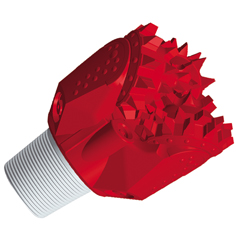
The tricone drill bit remains one of the most widely used drilling tools in oil & gas, water well, mining, and geothermal applications. Its versatility, adaptability to different formations, and proven performance make it a staple in drilling operations worldwide.
However, premature tricone drill bit failure is a common and costly problem. Early bearing wear, broken teeth, or abnormal gauge loss can significantly increase drilling costs, reduce rate of penetration (ROP), and lead to unexpected downtime.
Drilling engineers and procurement managers frequently search for answers to questions such as:
Why did the tricone bit fail so early?
How can bearing life be extended?
What causes tooth breakage in hard formations?
This article explores five common causes of premature tricone bit failure and, more importantly, explains how to prevent them—from correct operating practices to the critical role of high-precision manufacturing.
1. Bearing Failure: The Most Common Cause of Tricone Bit Failure
Why Bearings Fail
Bearing failure is the leading cause of tricone drill bit retirement. Once the bearing system fails, the cone can seize, wobble, or even detach—forcing the bit out of service regardless of tooth condition.
Common causes include:
Sealed vs. Non-Sealed Bearings
Understanding the difference between sealed and non-sealed bearings is critical when selecting a tricone drill bit.
Non-sealed bearings rely on drilling fluid for cooling and lubrication. They are generally suitable for softer formations and shorter runs but are more vulnerable to abrasive wear.
Sealed bearing tricone bits use elastomer or metal seals combined with grease reservoirs to protect bearings from contamination, making them ideal for longer runs and harder formations.
How to Prevent Bearing Failure
Select the appropriate bearing type based on formation hardness and drilling duration
Avoid excessive weight on bit (WOB) that overloads the bearing system
Use high-quality tricone drill bits with precise bearing tolerances
High manufacturing accuracy is essential here—poor bearing alignment or inconsistent clearances dramatically shorten bearing life.
2. Broken or Lost Teeth: Hard Formation Challenges
Tooth Failure in Hard Rock Drilling
Broken teeth or missing inserts are another frequent reason for premature tricone drill bit failure, especially in hard or abrasive formations.
This problem often occurs due to:
Milled tooth bits may suffer from accelerated wear, while TCI (tungsten carbide insert) bits can experience insert cracking or loss if the structure is not properly supported.
The Importance of Shirttail Protection
The shirttail area of a tricone drill bit is particularly vulnerable in hard formations. Insufficient protection leads to gauge loss, cone damage, and structural failure.
Effective shirttail protection includes:
Hardfacing materials resistant to abrasion
Optimized geometry to reduce stress concentration
Precise machining to ensure uniform load distribution
Without proper shirttail protection, even high-quality inserts cannot compensate for structural weakness.
3. Incorrect Weight on Bit (WOB) and Rotary Speed (RPM)
How Operating Parameters Affect Bit Life
Even the best tricone drill bit can fail prematurely if operated incorrectly. Two of the most critical parameters are weight on bit (WOB) and rotary speed (RPM).
Common operational mistakes include:
Excessive WOB causing bearing overload and tooth breakage
High RPM leading to heat buildup and accelerated wear
Improper WOB/RPM combination that induces vibration
These issues often result in:
Best Practices for WOB and RPM
To extend tricone drill bit life:
Follow manufacturer-recommended WOB and RPM ranges
Adjust parameters gradually when transitioning between formations
Monitor vibration and torque changes during drilling
Correct operation reduces mechanical stress and allows the bit to perform as designed.
4. Poor Manufacturing Precision and Geometry Deviation
Why Manufacturing Quality Matters
Not all tricone drill bits are created equal. Even small deviations in geometry can cause uneven load distribution, leading to localized stress, abnormal wear, and early failure.
Key manufacturing factors include:
When these elements are not precisely controlled, the bit may fail even under correct operating conditions.
Advanced Manufacturing at Great Drill Bit
At Great Drill Bit, manufacturing precision is a core focus. The company utilizes advanced five-axis linkage machining and turning-milling compound production lines to ensure every tricone drill bit meets strict geometric tolerances.
These technologies allow for:
Highly accurate cone geometry
Precise bearing alignment
Consistent insert placement
Reduced variability between batches
By ensuring geometric precision at the manufacturing stage, non-abrasive and abnormal wear can be significantly reduced.
5. Bit Selection Mismatch with Formation Conditions
Using the Wrong Bit for the Job
Another common cause of premature failure is selecting a tricone drill bit that is not optimized for the formation being drilled.
Examples include:
Using soft-formation bits in hard, abrasive rock
Selecting non-sealed bearings for long, high-load runs
Incorrect insert shape or spacing
This mismatch often leads to accelerated wear, tooth failure, or bearing damage.
How to Prevent Selection Errors
Analyze formation hardness, abrasiveness, and compressive strength
Consult experienced manufacturers for bit recommendations
Match bit design features to drilling objectives
Correct selection ensures that the tricone drill bit operates within its intended performance envelope.
The Role of Precision Manufacturing in Preventing Premature Failure
High-precision manufacturing bridges the gap between design and performance. Even the best design cannot deliver long service life without accurate execution.
At Great Drill Bit, advanced CNC systems, five-axis machining, and turning-milling compound processes are used to:
Maintain strict dimensional accuracy
Improve load balance across cones
Enhance bearing and insert reliability
This manufacturing approach directly contributes to longer bit life, more predictable performance, and reduced drilling cost per meter.
Conclusion: Precision Manufacturing + Proper Operation = Maximum Bit Life
Premature tricone drill bit failure is rarely caused by a single factor. In most cases, it is the result of:
Bearing system limitations
Tooth or insert damage
Incorrect operating parameters
Manufacturing precision issues
Bit-to-formation mismatch
The longest service life is achieved only when high-precision manufacturing is combined with correct bit selection and proper drilling practices.
For drilling operations seeking reliable, long-lasting tricone drill bits, working with a manufacturer that understands both engineering precision and real-world drilling challenges is essential.
Learn more about Great Drill Bit and its advanced tricone drill bit solutions at:
https://www.greatdrillbit.com/
 English
 français
 Deutsch
 Español
 italiano
 русский
 português
 العربية
 tiếng việt
 ไทย
ไทย Nederland