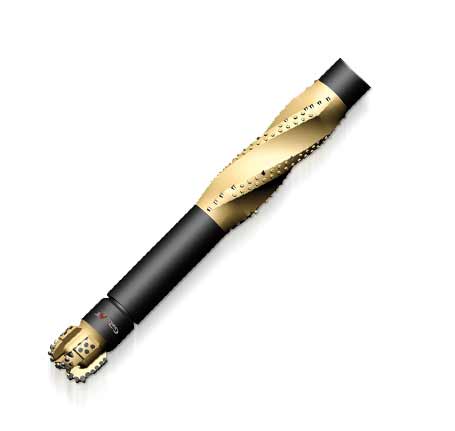
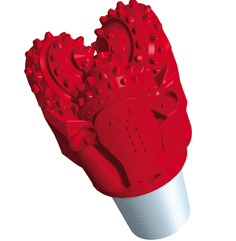
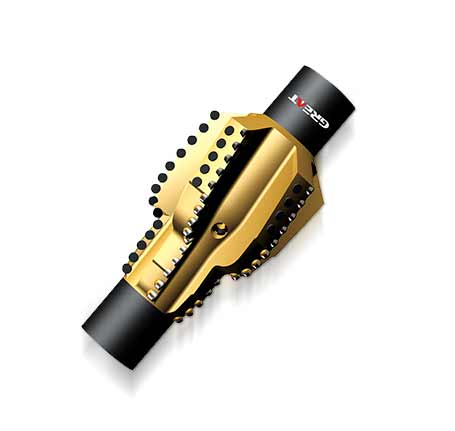
Selecting a downhole motor involves balancing outer diameter (OD), bend angle, and flow rate to match the wellbore geometry, steering requirements, and hydraulic power available. By using a structured selection process, system integrators can avoid costly mismatches, reduce non-productive time, and ensure reliable directional drilling performance.
Why Downhole Motor OD, Bend, and Flow Matter
Downhole motors are positive displacement motors (PDMs) or turbines that convert hydraulic energy from drilling fluid into mechanical rotation. This rotation drives the bit, and when combined with a bent housing or adjustable kick-off, enables directional drilling. The three parameters of OD, bend, and flow determine the motor's compatibility with the wellbore, its steering response, and its power output.
According to the technical literature indexed by OnePetro, downhole motor selection is a well-studied problem in drilling engineering. Papers cover topics from motor performance under variable flow rates to the mechanical limits of bent housings. The breadth of this literature underscores the importance of a systematic approach for system integrators who must assemble reliable bottomhole assemblies (BHAs).
 Outer Diameter (OD): Matching the Wellbore
The OD of the motor is the first filter in selection. The motor must pass through the casing's drift diameter and leave sufficient annular space for cuttings transport and cementing operations. As a rule of thumb, the motor OD should be at least 1.5 inches smaller than the hole size, but exact clearances are application-specific.
When comparing motors, a larger OD gives more power but reduces annular velocity. For a given flow rate, lower annular velocity can impair hole cleaning. Conversely, a small OD may not provide enough torque for the bit. Thus, the OD selection is a compromise between hydraulics and power.
To support this decision, manufacturers publish specification books that list ODs for each motor family. For example, Halliburton and Baker Hughes offer a range of drilling tools, and their documentation is a starting point for sizing. However, cross-referencing bit size and casing dimensions is essential. The choice of PDC bit, for instance, often drives the motor size; both Halliburton and Baker Hughes provide extensive online resources for bit selection that can be correlated with motor recommendations.
Bend Angle: Balancing Steerability and Stress
The bend angle is the tilt between the motor's main axis and the bit sub. It converts the motor into a steerable unit. Bend angles typically range from 0° to 3°, depending on the motor design. A higher bend angle increases the dogleg severity (DLS) capability, allowing the wellbore to curve more sharply. This is critical for geosteering and complex well profiles.
However, a greater bend angle also increases side force on the bit and stresses on the bend housing. This can reduce component life and increase torque and drag. The optimal angle depends on the desired DLS and the formation. In hard, abrasive formations, a smaller angle may be preferred to minimize stress. In soft formations, a larger angle can be used to achieve aggressive trajectories.
According to the technical papers cataloged by OnePetro, several SPE studies have compared bend design variations and their impact on tool reliability. While specifics require research, the general trade-off is well established. For preliminary selection, system integrators should define the minimum DLS required and then choose the lowest bend angle that meets it.
Flow Rate: Driving Power and Hydraulics
Flow rate, measured in gallons per minute (gpm) or liters per second, is the energy source for the motor. The flow rate controls the rotor speed (RPM) and the torque delivered to the bit. Increasing the flow rate generally raises both speed and torque, but the relationship is not linear and depends on the motor's power section design.
A common mistake in motor selection is to choose a motor based solely on OD and bend while ignoring the flow required. If the existing pump capacity cannot deliver the required flow, the motor will underperform. Conversely, too high a flow can over-speed the motor, leading to premature wear or failure. The optimal flow is driven by the bit requirements and the drilling fluid properties. For example, higher mud weights require more hydraulic energy to drive the same motor.
As the OnePetro literature indicates, flow selection also interacts with hole cleaning and equivalent circulating density (ECD). A comprehensive selection method should therefore model the entire hydraulic system, not just the motor.
Positive Displacement Motors vs. Turbine Motors
The three parameters are applied similarly to both PDMs and turbines, but there are differences. PDMs (Moineau-type) are positive displacement devices, meaning the rotor speed is directly proportional to flow rate. Turbines are dynamic devices; their speed depends on both flow and torque load. PDM performance is easier to predict and offers good torque, making them popular in directional drilling. Turbines can handle higher temperatures and are often used in harsh environments.
When comparing costs, PDMs are generally less expensive upfront and have lower maintenance requirements. Turbines, however, may offer a longer life in extreme conditions. The choice between the two influences how the OD, bend, and flow are sized.
Cost Considerations
While not a technical parameter, cost is critical. Downhole motor prices vary with OD, bend capability, and material. Larger ODs and higher bend angles generally increase the price. Additionally, titanium or specialized elastomer power sections add cost. System integrators should compare total cost of ownership, including expected life and repair costs, not just the purchase price.
Due to the lack of pricing data in this article's scope, a detailed cost table is not provided. Exact pricing should be obtained from suppliers such as Halliburton or Baker Hughes, whose sales teams can provide quotes based on the selected configuration.
Integration with Bit Selection
The motor working in conjunction with the bit is the heart of the BHA. The bit's size and design must match the motor's torque and speed. For example, PDC bits require high torque to maintain efficient cutting, which is a key reason to select a motor with adequate power. Halliburton's and Baker Hughes' PDC bit pages are valuable references for understanding bit requirements. Their product lines show how bit design varies by formation, and by extension, it informs motor selection.
Who Should Use This Guide?
This guide is intended for B2B system integrators who are assembling drilling tools for operation or resale. It will also be useful for drilling engineers who need to specify BHAs for upcoming wells. The information here is aimed at making the preliminary selection process faster and more accurate.
Common Selection Mistakes to Avoid
Even experienced engineers can fall into traps when selecting downhole motors. Here are three pitfalls to avoid:
Ignoring annular clearance: A motor that is too large for the wellbore can cause pack-off or poor cementing.
Overestimating available flow: Assuming pump capacity that cannot be delivered leads to tool starvation and underperformance.
Selecting the bend without considering stress: A too-high bend angle in hard formations can accelerate fatigue and failure.
By avoiding these mistakes, system integrators can reduce NPT and increase drilling efficiency.
Conclusion and Recommendations
Successful downhole motor selection requires a multi-disciplinary approach that considers wellbore geometry, hydraulic power, and drilling mechanics. By systematically evaluating OD, bend, and flow, system integrators can improve drilling efficiency and reduce tool failures. Always collaborate with motor manufacturers to validate preliminary selections.
For further research, the OnePetro technical library offers thousands of SPE papers on downhole motors, while the Halliburton and Baker Hughes websites provide practical product data. Use these resources to deepen your understanding before finalizing any configuration.
 English
 français
 Deutsch
 Español
 italiano
 русский
 português
 العربية
 tiếng việt
 ไทย
ไทย Nederland