A crocodile PDC reamer is a fixed-diameter wellbore conditioning tool with aggressive, spiral cutter ridges. Its geometry is intended to engage the borehole wall, help wipe and condition the gauge, and support reaming while circulating. In suitable configurations, it can work during forward travel and back-reaming. It is not a substitute for correct hole design, drilling-fluid management, or a verified operating plan.
For directional drillers, HDD specialists, mud engineers, and casing crews, the practical question is whether the tool fits the formation, hole size, BHA, and required reaming direction. This guide explains the geometry and its limits, then outlines field-use and BHA checks. For product-specific configuration, see GREAT’s crocodile PDC reamer.
What Is a Crocodile PDC Reamer and How Does Its Geometry Work?
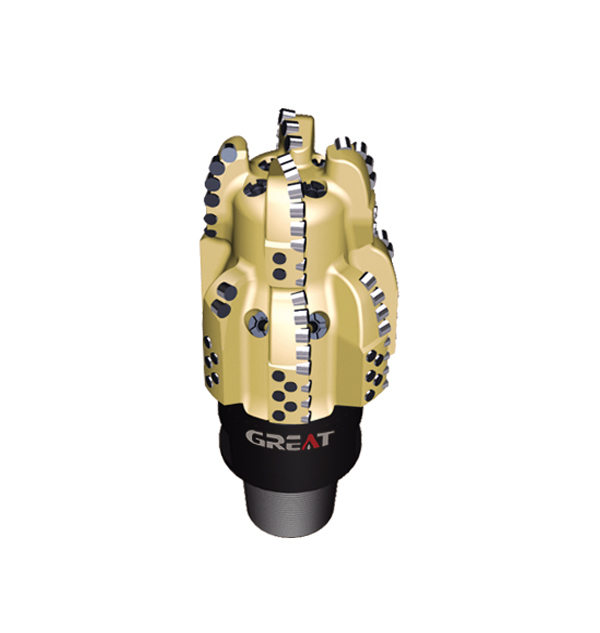
A PDC reamer enlarges or conditions a bore using fixed diamond cutters rather than the rolling cones used in a roller-cone reamer. The cutters shear or scrape formation where they contact the wall. On a crocodile reamer, the cutter ridges follow an aggressive spiral profile around the tool body, creating repeated wall-contacting features along its working length.
The “crocodile” description refers to the ridged cutter profile, not to a separate cutting mechanism. The spiral arrangement is intended to maintain engagement as the assembly moves and rotates. The tool can therefore perform a conditioning role as well as address localized undersized or irregular sections, provided its diameter and operating limits match the hole and BHA.
Do not assume that every reamer can cut the same diameter in both directions. Back-reaming suitability depends on the cutter arrangement, tool design, connections, and operating instructions. Confirm the specific product’s permitted direction of rotation, axial movement, torque, and reaming operation with the manufacturer before running it.
Spiral Ridge Design: Superior Borehole Wiping and Dynamic Centering
Spiral ridges distribute cutter contact along the body rather than concentrating all engagement at a single circumferential band. As the tool rotates and advances, the ridges can wipe the borehole gauge and help address ledges, compacted material, or minor irregularities. “Wiping” describes mechanical contact with the wall; it does not mean the tool can restore a severely collapsed hole or correct an unsuitable drilling-fluid program.
The geometry can also contribute to dynamic centering. Contact around the bore may help the assembly track through a section, but a reamer is not an active steering device. Its ability to guide or stabilize depends on clearance, BHA stiffness, hole condition, operating parameters, and the way the tool is placed in the string. Treat centering as a design effect to evaluate, not a guaranteed outcome.
Hydraulic performance remains a system issue. Circulating fluid transports cuttings through the annulus and helps clean the working area. A spiral body may influence local flow paths and solids movement, but the ridges do not replace adequate flow rate, suitable mud properties, or correct hole-cleaning practice. Check the tool drawing for flow passages and restrictions rather than assuming a particular nozzle or hydraulic configuration.
Before selecting a spiral PDC reamer, compare its maximum outside diameter with the required bore, the existing hole, and every restriction the assembly must pass. Also verify connection compatibility, available circulation capacity, expected torque, and clearance for the full BHA. A nominal reamer size alone does not establish that the tool will pass through the entire well path.
Preventing Tight Hole and Differential Sticking in Swelling or Sloughing Shales
Reactive shale can absorb water or otherwise respond to drilling-fluid exposure. Depending on the formation and fluid system, the result may include swelling, sloughing, cavings, or a narrowing and irregular bore. These conditions can increase drag, make tripping or casing difficult, and complicate circulation. A wellbore conditioning tool can help mechanically wipe and ream accessible restrictions, but it cannot prevent shale instability on its own.
In a sticky-clay interval, the spiral ridges may help work against material adhering to or protruding into the bore while circulation carries loosened solids away. Results depend on cutter engagement, the character of the material, fluid transport, and operating practice. Avoid forcing the tool through a suspected pack-off or severe restriction; high torque or overpull can damage equipment or worsen the situation.
Differential sticking has a different primary mechanism: a pipe or tool becomes held against a permeable formation by a pressure differential across a filter cake. A reamer may condition the bore and reduce mechanical tight spots, but it does not eliminate the pressure differential or guarantee prevention of differential sticking. Mud weight, fluid-loss control, filter-cake characteristics, exposure time, and operational procedures remain important considerations.
Use the reamer as one element of a coordinated hole-cleaning and stability plan. Review returns, cuttings character, torque and drag trends, circulation response, and any signs of cavings or restricted flow. Mud engineers should assess fluid inhibition, rheology, density, and solids control against the formation and well plan. The appropriate values are project-specific; do not infer a mud program from the reamer geometry.
Dual-Direction Reaming: Smooth Forward Drilling and Safe Back-Reaming
Forward reaming conditions the hole as the assembly advances. Back-reaming works the interval while pulling the assembly out, which can help address tight sections encountered during withdrawal. The crocodile-style spiral ridge concept is intended to support repeated engagement during these movements, making the tool relevant where both forward travel and back-reaming are part of the operating plan.
“Dual-direction” should not be read as permission to rotate or pull in any direction at any speed. Confirm the product’s approved operating envelope, including rotation direction, torque, axial load, circulation requirements, and connection limits. If the tool has direction-sensitive cutters or restrictions, the manufacturer’s guidance takes precedence over a general description of back-reaming utility.
During either operation, use a controlled approach. Monitor torque, pull force, standpipe pressure, returns, and progress. A sudden change may indicate a restriction, poor hole cleaning, cuttings accumulation, or a mechanical issue. Stop and diagnose abnormal trends rather than increasing load automatically. Circulation and movement should be managed according to the well program and the tool’s operating instructions.
A crocodile reamer may be considered as an expandable reamer alternative when a fixed working diameter suits the job and the assembly can be run through the required restrictions. It is not a direct replacement where the operation requires a variable or expandable diameter, or where the tool must pass through a smaller restriction before opening. Compare deployment sequence, target hole size, access restrictions, and operational requirements before deciding.
Field Case Scenarios: Complex HDD Crossings and Deep Intermediate Casing Runs
Complex HDD crossing: An HDD crew may encounter variable ground, sticky clay, or a section that develops increasing drag during a reaming pass. A spiral PDC reamer may be evaluated where the required bore diameter and formation are compatible with fixed cutters. The crew should confirm the pilot-hole condition, reaming sequence, drilling-fluid circulation and returns, tool-to-string compatibility, and the route’s tightest restriction. The tool does not remove the need to size each reaming stage to the project design.
Reactive or sloughing shale: If returns indicate cavings or the assembly shows increasing torque and drag, a conditioning pass may help address mechanical irregularities that remain accessible. It should be coordinated with an assessment of fluid compatibility, hole stability, and solids transport. Reaming cannot make an unstable interval safe by itself, and continuing through a worsening condition without diagnosis can increase operational risk.
Deep intermediate casing run: Before casing, a conditioning trip may be considered when the drilling record suggests tight spots or an irregular gauge that could impede passage. The reamer’s outside diameter, BHA placement, connection compatibility, and the casing program’s clearance requirements all need review. Casing supervisors should align the conditioning plan with the expected casing clearance, circulation plan, and contingency procedures. No tool can guarantee a successful casing run.
Across these scenarios, selection depends on formation abrasiveness and strength, hole geometry, required gauge, tool access, circulation, and the expected loads. A fixed-diameter crocodile reamer is not suitable for every formation or every reaming sequence. Provide the manufacturer with the planned hole and tool sizes, formation description, rig or drill-string details, connection, and whether forward reaming, back-reaming, or both are required.
Integrating Crocodile Reamers into the Bottom Hole Assembly (BHA)
BHA placement should follow the job objective rather than a universal rule. A near-bit position may be considered when the purpose is to condition the newly drilled interval, while a position farther up the assembly may suit a different pass or operating sequence. The correct location depends on the drilling system, directional-control requirements, formation, tool design, and the restrictions the assembly must traverse.
Before making up the BHA, confirm:
Hole and tool dimensions: Verify the reamer’s working diameter against the target bore and every restriction in the planned path.
Connections and load limits: Match the connection and check the manufacturer’s torque, axial-load, and operating guidance.
Position and function: Decide whether the tool is intended for forward conditioning, back-reaming, gauge wiping, or a defined combination.
Directional and clearance effects: Review how its position and outside diameter may affect steering response, stiffness, and passage through the well path.
Hydraulics and solids transport: Confirm flow-path details and assess whether the planned circulation can transport the expected cuttings.
Operating and contingency plan: Set monitoring and response steps for abnormal torque, drag, pressure, returns, or progress.
After the run, inspect the tool for cutter damage and wear, and compare that evidence with the interval and operating record. Changes in cutter condition, torque, and reaming behavior can inform future selection, but one run should not be treated as proof of performance in a different formation or BHA.
GREAT manufactures drilling tools for applications including oil and gas, HDD, water wells, mining, and foundation drilling. Its supplied company information describes an approximately 86,000 m² manufacturing facility in Hebei, China, with CNC, five-axis machining, and diamond-processing capabilities. For a project-specific crocodile PDC reamer recommendation, share the formation, hole sizes, drilling system, connections, and planned reaming directions with the GREAT team through the product inquiry page.
 English
 français
 Deutsch
 Español
 italiano
 русский
 português
 العربية
 tiếng việt
 ไทย
 Nederland